

Rwanda’s economic growth has long been a source of national pride. But for many households and young job seekers, rising living costs and persistent unemployment are casting a shadow over that progress.
Inflation puts pressure on youth
Inflation in Rwanda has climbed in recent months, raising the cost of basic goods and services. According to the National Institute of Statistics of Rwanda (NISR), the Consumer Price Index rose 7.1% year-on-year in August 2025. Food and non-alcoholic beverages increased by 5.4%, while imported goods rose 8.3%. In June 2025, inflation stood at 7.0%, with food prices up 8.7%.
Many unemployed youth are feeling the strain. Mutoni, a single youthful mother of one child in Kigali, said her weekly grocery bill jumped from 10,000 RWF to 15,000 RWF in a few months. “Prices keep increasing, yet I have not yet gotten another job since I gave birth, where I was working the found a replacement. I don’t know how much longer i can manage,” she said. Housing, clothing, and transport costs are also rising, forcing households to make tough decisions.
Youth unemployment remains high
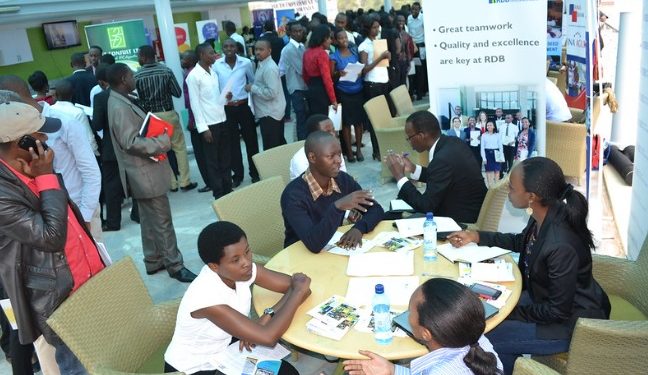
While inflation grips households, the labor market is not keeping pace, especially for young people. NISR data show youth unemployment (ages 15–24) at 15.5% in Q3 2025, down from around 21% in 2023 but still higher than the 11.7% adult rate. The 2024 Labor Force Survey shows youth NEET (not in employment, education, or training) at 28.4%, with young women disproportionately affected at 35.2% versus 21.3% for men.
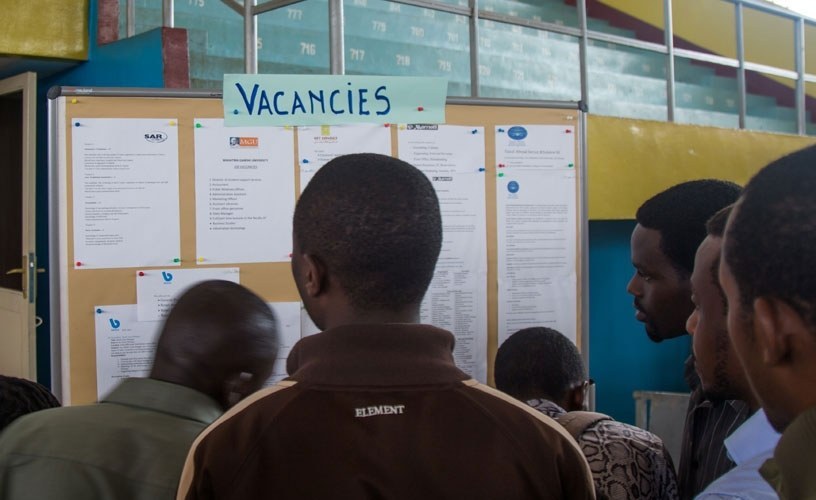
Graduates face particular challenges. Raymond, 25, a social sciences graduate from Kigali, has applied for more than 30 jobs in a year without success. “Most employers tell me I don’t have enough experience. But how can I get experience when no one gives me a chance?” he said. Amina, 23, from Bugesera district, left vocational training when she realized most available work was informal or seasonal. “I thought finishing school meant getting a job. Instead, I ended up back on my parents’ farm without regular income or security,” she said.
Gender and structural disparities
Labor-market data highlight stark gender and regional inequalities. In November 2024, unemployment among women was 17.5%, compared with 12.2% for men. Overall labor underutilization—including unemployment and underemployment—stood at 54.2%, with youth and women disproportionately represented.
Policy recommendations
Policymakers, development partners, and employers must act. Targeted youth employment programs including internships, apprenticeships, and mentoring can help close the “experience barrier” for graduates like Jean-Claude. Vocational and skills-based training in growth sectors can equip young people with practical competencies for stable employment.
Gender-responsive policies are essential to reduce higher unemployment and NEET rates among young women. Finally, stronger monitoring and evaluation can track transitions from education to employment, enabling data-driven planning and more effective interventions.
Rwanda’s economic growth is real, but national averages mask deeper challenges: many youth, especially women, face barriers to stable work like Mutoni who did not have a job contract and now left to fend for herself and the baby.
“I asked for a job contract before i started worked, but my employer was not willing to give it to me and others too, he hires and fires employees at his will and when have tried to rise the problem to the labor officer in our district but he is of no much help, something has to be done to protect most employees.” she concluded.
Sources
- National Institute of Statistics of Rwanda, Labour Force Surveys Q2, Q3, Q4 2024 and Q3 2025
- Interviews with graduates in Kigali and Eastern Province