

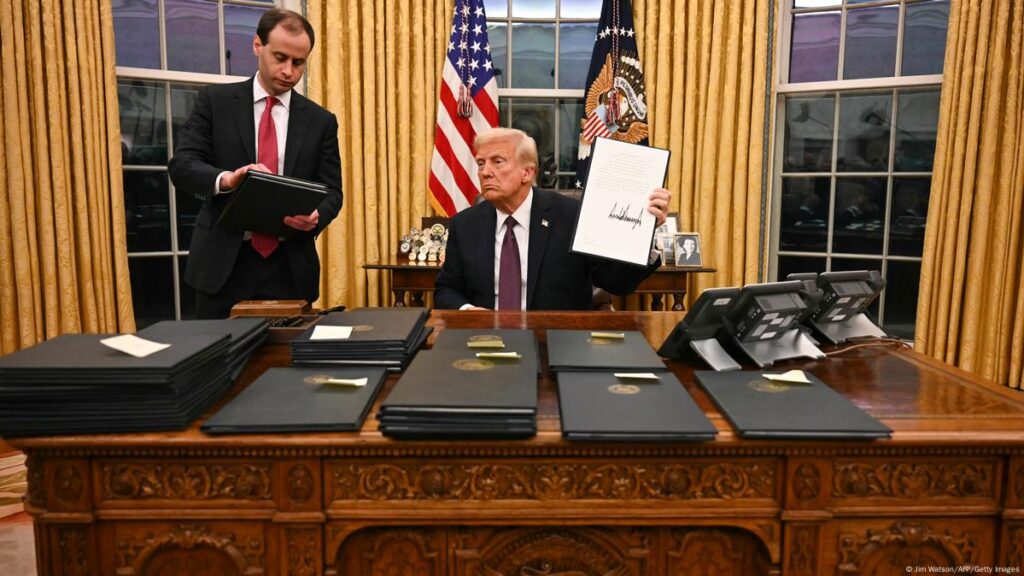
When President Donald Trump began his second term on January 20, he issued an executive order that froze billions in U.S. foreign aid. This pause, lasting 90 days, is meant to review funding priorities and align aid with the administration’s policies. However, this move has already sparked concern, especially when it comes to higher education in Africa.
A Major Disruption for African Universities
U.S. foreign assistance has been a vital source of support for African universities, especially through programs like the Higher Education Solutions Network (HESN), backed by USAID. Through HESN, partnerships between African and American universities have flourished, promoting research on critical issues like health, climate change, and agriculture. But now, these connections are in jeopardy.
USAID, once the largest distributor of U.S. foreign aid, is undergoing major changes. As part of the restructuring, many USAID employees are being placed on administrative leave. The agency is also being restructured under the State Department’s control, with a new acting administrator. This overhaul is fueled by growing criticism from figures like Elon Musk, who has called USAID “a ball of worms,” suggesting the agency may be beyond saving.
What’s at Stake for African Universities?
Trump’s “America First” policy, with its focus on domestic priorities, has had the unintended effect of sidelining Africa. The freeze on U.S. aid threatens several key areas of collaboration:
- Partnerships with U.S. Universities: Many African universities work with American institutions on vital research, including climate studies, public health, and agriculture.
- Capacity Building: USAID funds programs that help train African academics and improve university governance and research capabilities.
- Scholarships and Bursaries: Many African students rely on U.S. aid-supported scholarships to pursue higher education.
These resources have been crucial for expanding educational access and improving quality. With the freeze in place, the future of these initiatives is uncertain, raising concerns about the sustainability of Africa’s higher education progress without external support.
The Impact on Research and Innovation
African universities have become key players in addressing global challenges, thanks to collaborations with U.S. institutions. Areas like public health, climate resilience, and food security have benefited greatly from these partnerships.
But now, with the freeze, essential research projects face disruption:
- Public Health: Many African universities work with U.S. institutions on critical health issues like HIV/AIDS, malaria, and emerging diseases. Without funding, these efforts could stall.
- Climate Change: Research on droughts, desertification, and climate adaptation is at risk, making it harder for Africa to tackle its climate challenges.
- Agriculture: U.S. aid has supported initiatives like Feed the Future, which has helped African universities develop resilient crops and better farming practices. Now, these programs are facing uncertainty.
Without U.S. backing, progress could slow, especially in universities that lack alternative funding sources.
Student and Faculty Mobility at Risk
The U.S. has long been a top destination for African students. Thousands have benefited from scholarships and academic exchanges. But with stricter visa policies already limiting access to U.S. universities, the freeze will only make things worse.
Key consequences could include:
- Fewer Scholarships: African students who depend on USAID funding may now struggle to afford U.S. tuition.
- Declining Faculty Exchanges: Budget cuts could limit opportunities for African and U.S. academics to share knowledge.
- Shifting Preferences: With fewer opportunities in the U.S., African students may turn to other countries like the UK, Canada, or China for their education.
This shift could reduce U.S. influence in Africa’s academic scene.
A Changing Landscape for US-Africa Academic Ties
If the freeze continues, the impact on African higher education could be long-lasting. Many of the strides made in expanding access and improving research have relied on U.S. funding. So, what can be done?
- Advocating for Policy Change: African leaders in education may need to speak out to ensure U.S. academic investment continues.
- Seeking Alternative Funding: African universities may look to Europe, China, or private foundations for support.
- Strengthening Intra-African Collaboration: African universities could collaborate more within the continent to build self-reliance in research and funding.
A Turning Point for Africa’s Higher Education?
Africa’s universities are at a crossroads. The U.S. aid freeze threatens to disrupt research, partnerships, and student mobility. While African institutions have shown resilience, the big question is: can they continue to thrive without U.S. support?
The next few years will be crucial for Africa’s academic future. Whether the U.S. restores aid or Africa turns to new global partners, universities will need to adapt to a changing landscape.
The freeze on U.S. foreign aid may only be temporary, but its consequences for African higher education could be felt for years to come. As Africa’s universities navigate these uncertain times, the world will be watching to see how they rise to the challenge.