

In Karongi district Western Province, many small traders choose to operate without registering their businesses or paying taxes. They prefer to stay off the radar rather than deal with the country’s tax system. Traders like Theophile and Agnes Mukandoli are just two examples of this growing trend.
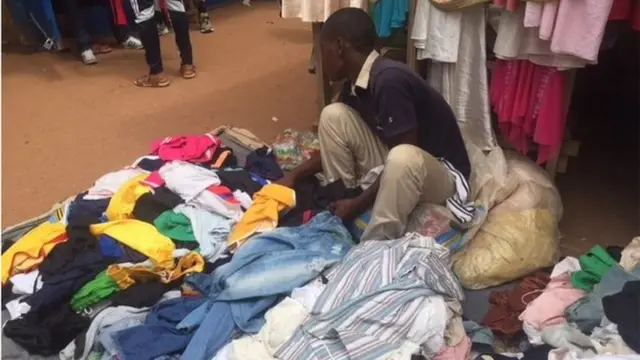
Theophile, a second-hand clothes vendor in Karongi, has been running his business for years without a formal license. “It’s easier to keep my business small and unregistered,” he says. “If I register, they’ll tax me, and I’ll lose most of my profits.” Like many others, Theophile sees staying unregistered as the only way to survive. “If I’m caught, it’s the end of my business,” he admits.
Agnes, also selling second-hand shoes in Karongi, shares the same fears. She’s been in business for over two years without registering or paying taxes. “I know that registering means paying taxes,” she explains. “But those taxes will eat into my profits. For me, staying unregistered is the only way to stay afloat.” According to the Rwanda Revenue Authority (RRA), a large number of small traders like Agnes avoid registration. Around 70% of informal businesses in Rwanda either don’t know how to register or fear the tax burden.

This issue extends beyond Karongi, affecting many parts of Western Province. Informal businesses are a major part of the economy, but they contribute little to the national tax revenue. The RRA estimates that the informal sector makes up about 50–60% of Rwanda’s GDP. However, over 70% of these businesses are either unaware of the registration process or avoid it due to concerns about taxes and bureaucracy.
The result is billions of Rwandan francs in lost tax revenue each year. This gap in tax collection makes it difficult for the government to fund essential public services like healthcare, education, and infrastructure. Dr. Nada Eissa, a professor at the McCourt School of Public Policy, warns that without adequate tax revenue, governments end up relying on external loans and grants. “This is not a sustainable solution in the long run,” she says.
For traders in Karongi, the fear of high taxes and complicated paperwork is a significant barrier. Many, like Theophile and Agnes, believe that paying taxes would put them out of business. Some traders also find other ways to avoid formalizing their businesses—by paying bribes to local officials. One trader in the Eastern Province shared, “Tax supervisors turn a blind eye if you pay them regularly. You can keep selling without any problems.”
The RRA has introduced efforts to address tax evasion, such as the voluntary disclosure program, which allows businesses to pay overdue taxes without penalties. They’ve also launched a new digital platform to simplify the registration process. However, many traders remain hesitant. Jean Marie, another trader in Karongi, says, “I’ve heard about the new platform, but I’m not sure if it’s worth the hassle. I don’t want to get caught up in taxes.”
Despite these efforts, tax evasion remains a serious issue in Karongi. Until more traders understand the benefits of formalizing their businesses, many will continue to operate outside the system, widening the gap in Rwanda’s tax revenue. Experts agree that more engagement with traders is needed to address their concerns and make the formalization process more appealing.
For now, the struggle between the informal sector and tax compliance continues in the region, leaving the government to tackle this growing challenge.