


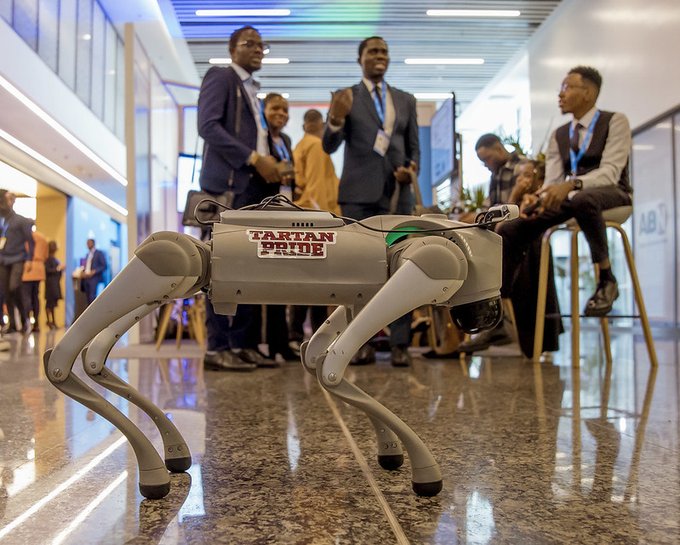
Rwanda has become the first African country to host a Centre for the Fourth Industrial Revolution (C4IR), a joint initiative launched by the Rwandan government and the World Economic Forum (WEF) aimed at shaping inclusive and agile technology governance.
Launched by the Ministry of Information Communication Technology and Innovation in collaboration with WEF, the center will focus on data governance, artificial intelligence (AI), and machine learning. It joins a global network of C4IRs working to guide public-private cooperation in harnessing emerging technologies for economic and social progress.
President Paul Kagame, speaking at the inauguration ceremony in Kigali, said Rwanda’s investments in science and technology have positioned the country to capitalize on the Fourth Industrial Revolution (4IR).
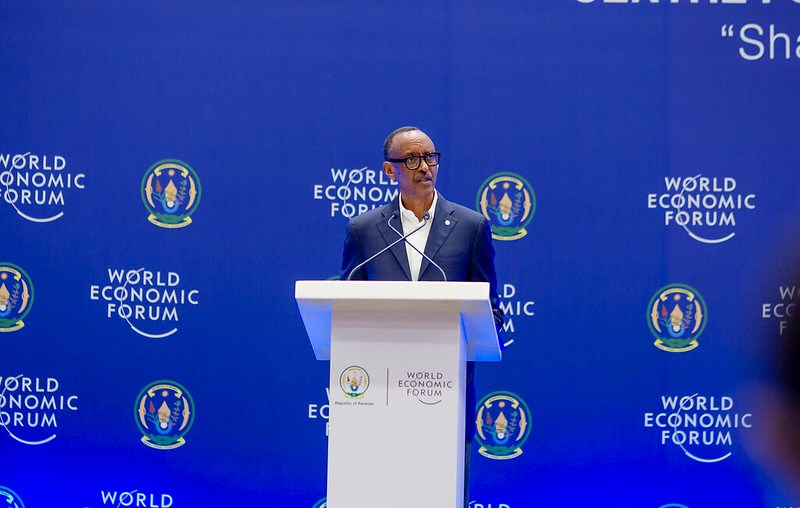
“We hope the Centre will build on this foundation to ensure that 4IR becomes a force for inclusive growth and solutions to global challenges,” Kagame said.
WEF Founder and Executive Chairman Klaus Schwab, who joined the ceremony virtually, emphasized Africa’s stake in the future of global technology governance.
“Africa must be a shaper, not just a consumer, of global technology trends,” Schwab said. “The C4IR in Rwanda is a major step forward.”
WEF President Børge Brende, delivering the keynote address, said the C4IR network helps leaders anticipate, understand, and respond to technological disruption with human-centered approaches.
Driving Innovation Through Policy and Pilots
C4IR Rwanda has already played a key role in shaping the country’s draft data protection and privacy legislation and co-designing a national AI policy. Several pilot projects are underway with the private sector, including initiatives in AI-powered healthcare.
One such project integrates WEF’s Chatbots RESET framework into the “AI Triage” pilot led by Babyl, a digital health provider. The system manages more than 4,000 medical consultations daily through call centers, demonstrating the potential for AI to transform primary healthcare delivery.
Alain Ndayishimiye, a project lead at C4IR Rwanda, said the center’s mission is to develop and test technology governance models with input from government, industry, civil society, and academia.
“Our goal is to maximize the benefits of emerging technologies while minimizing risks,” he said. “We bring together stakeholders to co-design policies that enable innovation at scale.”

The Kigali-based center is part of a network of 13 global C4IRs operating in countries including Japan, India, and the United States.
Enabling Smart Farming and Data-Driven Health Care
C4IR Rwanda’s work is closely aligned with the country’s development priorities, including achieving Sustainable Development Goals such as food security and universal health care.
The center is promoting precision agriculture, combining AI and Internet of Things (IoT) devices to help farmers monitor soil moisture, acidity, and planting conditions.
“Coupling AI with IoT enables farmers to make informed decisions,” Ndayishimiye said. “It’s part of how we can achieve food security using technology.”
Beyond agriculture, the center is also exploring precision medicine, with a focus on data-driven treatment and prevention.

Building a Responsible Data Economy
A core component of C4IR Rwanda’s work is promoting sound data governance. The center played a key role in drafting Rwanda’s data protection and privacy law and aims to attract data-driven companies by ensuring an enabling regulatory environment.
“If a company like Facebook wants to operate here using facial recognition algorithms, we must ensure that Rwanda also benefits from that data economy,” Ndayishimiye said.
Industry leaders say the center will fill a vital policy gap in Africa’s fast-evolving digital economy.
“Policies are the backbone of what we do,” said Eric Rutayisire, CEO of Charis, a Rwandan drone technology firm. “The center is well-positioned to provide that advocacy.”
Shivon Byamukama, managing director of Babyl Rwanda, also welcomed the center’s potential to facilitate cross-sector collaboration.
“It’s critical for policymakers to create an enabling environment for companies like ours to thrive,” she said. “We’re very interested in working with them.”
As emerging technologies redefine business, governance, and society, C4IR Rwanda aims to ensure the continent is not left behind—but leads with purpose, policy, and innovation.