

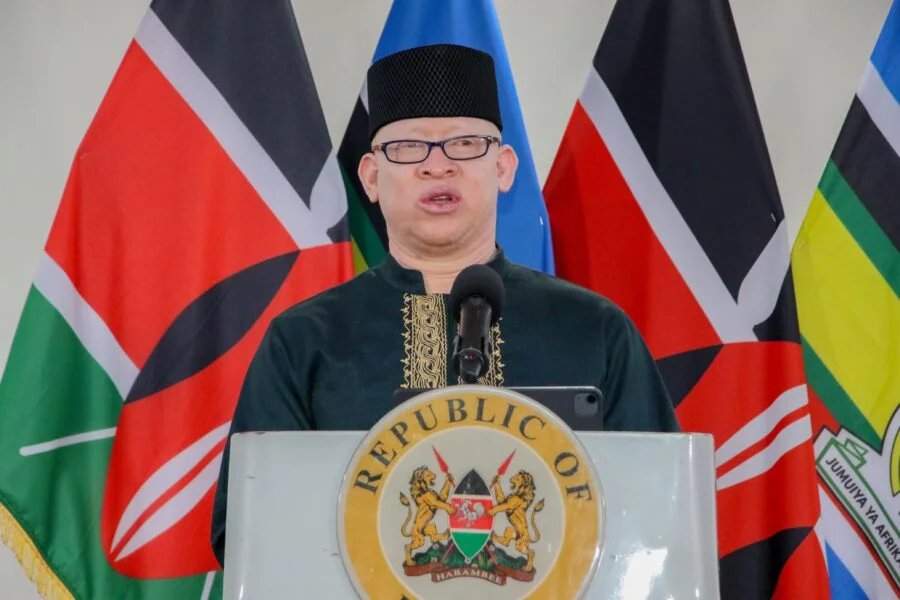
The Kenyan government has dismissed circulating claims about the Finance Bill 2025, saying no such proposal has been drafted or tabled in Parliament. Addressing reporters at KICC on Monday, Government Spokesperson Sen. (Dr.) Isaac Mwaura clarified that the budget process for the 2025/26 fiscal year is still ongoing and revenue-raising measures will only follow the release of the draft budget after April 30.
“Kenyans will be fully engaged through public participation once the Finance Bill is officially submitted to Parliament,” Mwaura said.
He noted that the government’s focus remains on fiscal consolidation, aiming to reduce public debt vulnerabilities while expanding public services through tax policy and administrative reforms — not increased taxation, as previously claimed online.
Mwaura pointed to progress under the Bottom-Up Economic Transformation Agenda (BETA Plan), especially in agriculture, where the government has rolled out Guaranteed Minimum Returns (GMR) to cushion farmers from market volatility.
As a result, the price of macadamia has risen from KES 24 to KES 100 per kilo, while coffee farmers now earn KES 130 per kilo, up from KES 50, thanks to reforms and direct payouts through M-Pesa. The government also reported increased farm gate prices for milk, sugarcane, and miraa, alongside advancements in avocado and tea exports and leather value addition.
“These tangible outcomes reflect our commitment to putting money into people’s pockets,” said Mwaura.
The government also touted the success of its universal health coverage initiative, Taifa Care, which replaced the National Hospital Insurance Fund (NHIF) in October 2024. Over 19 million Kenyans are now enrolled in the program, up from 8 million under NHIF.
More than 8.5 million Kenyans have received checkups under Taifa Care, with over 1 million referred for chronic conditions such as diabetes and hypertension.
“In one instance, a single mother, Amina, was able to afford her son’s cancer treatment after SHA increased oncology coverage to KES 550,000 per patient,” Mwaura said, referencing the Social Health Authority’s new claim processing system and higher ICU and HDU reimbursement rates.
The Ministry of Health is responding to multiple public health threats, including a Kala-azar outbreak in Wajir County that has affected over 600 people and claimed 33 lives. Three mobile laboratories and a new satellite blood bank are now operational in the region, contributing to a rise in recoveries.
Meanwhile, a cholera outbreak has been reported in Nairobi, Migori, and Kisumu counties, with 100 cases and six deaths as of April 8. In Kibera, a 12-year-old girl named Mercy narrowly survived the disease, which the government is combating through rapid response teams, public sensitization, and hygiene interventions.
The government also responded to recent events in the education sector, including the disruption of a student play at Butere Girls High School and the unlawful withholding of national exam certificates by some school principals.
“No child shall be denied their certificate due to unpaid school fees. That is illegal and unacceptable,” said Mwaura. County Directors of Education have been given 14 days to submit compliance reports.
On femicide, the government condemned the recent killing of 24-year-old Esther in Nairobi — one of over 100 reported femicide cases in the last six months. A technical working group on Gender-Based Violence and Femicide is reviewing key laws and plans to hold public forums across all 47 counties.
The revised National Policy on Prevention and Response to GBV is awaiting Cabinet approval, while Kenya recently signed the African Union Convention on Eliminating Violence Against Women and Girls.