

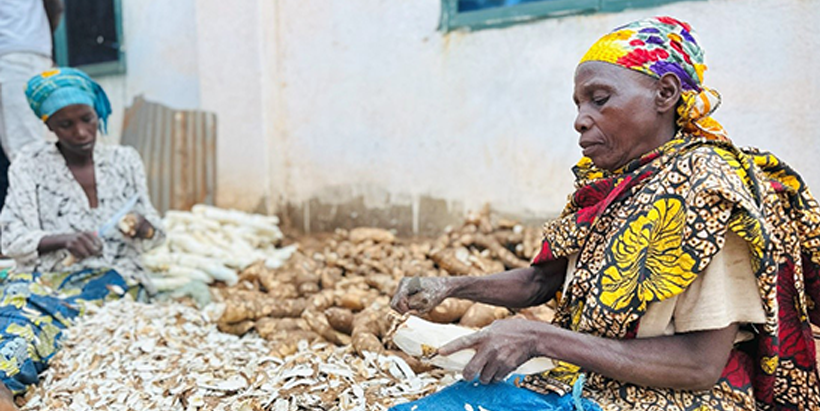
Rising maize prices are squeezing Rwanda’s livestock farmers, but a new innovation is offering relief: high-quality cassava peel (HQCP) mash.
Maize-based feed now sells for 400–600 Rwandan francs (about 28–41 cents) per kilogram. HQCP, made from processed cassava peels, costs half as much—200–250 francs per kilogram—while providing similar nutritional value.
The International Institute of Tropical Agriculture (IITA) and CGIAR, a global agricultural research partnership, have promoted HQCP through the Rural-Urban Nexus (RUNRES) project, funded by the Swiss Agency for Development and Cooperation. The initiative aims to reduce maize dependence in livestock feed, free up maize for human consumption, and cut feed imports.
“Producing animal feed from cassava peels will cut the amount of cereals previously imported for mixing with other feeds. This will increase income for farmers and livestock keepers,” said Jules Mutabazi, a researcher at the Rwanda Agriculture and Animal Resources Development Board.
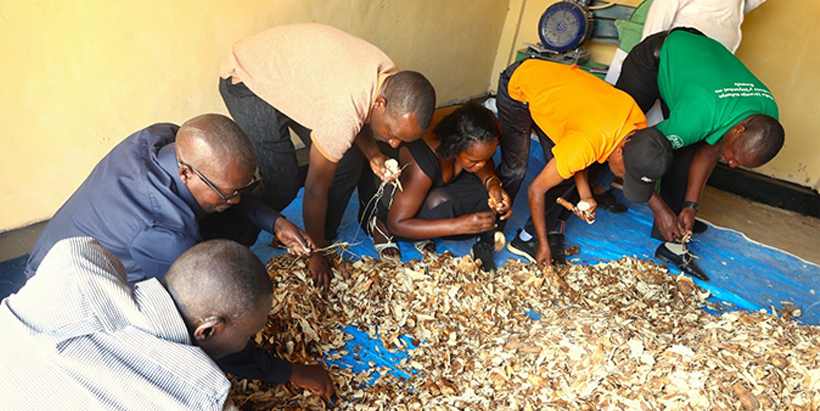
IITA is now scaling HQCP production among cassava and feed entrepreneurs to expand affordable feed access for cattle, goats, pigs, and poultry, while creating new agribusiness opportunities.
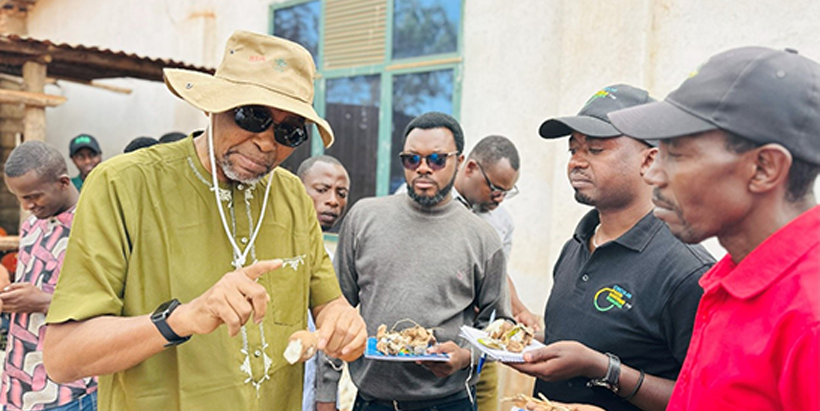
This month, IITA hosted a two-day training for 35 cassava and feed entrepreneurs in Rwanda, led by Dr. Iheanacho Okike of the International Livestock Research Institute. The sessions covered sorting, grating, dewatering, drying, milling, and storing HQCP feed.
“Wasting cassava peels is like throwing money away. Processing them into HQCP feed addresses high feed costs and reduces environmental impact,” Dr. Okike said.
Entrepreneurs attending the workshop praised the technology. Jean Claude Munyaneza Kabayiza, CEO of Holly Agriculture Company in Eastern Province, said the training strengthened his plans to start a cassava peel processing unit.
“I may not start with a large factory, but I can begin with a small or medium-scale unit that processes cassava while ensuring no residue is wasted,” he said.
Noella Umutoni, an animal feed entrepreneur from Bugesera District, added: “This cassava peel flour is helping us reduce the cost of animal feed. It is cheaper than maize feed but still provides the nutrients our livestock need.”
By turning agricultural waste into a valuable resource, HQCP technology offers a practical solution to feed affordability, helping Rwanda’s livestock industry and supporting broader food security goals.