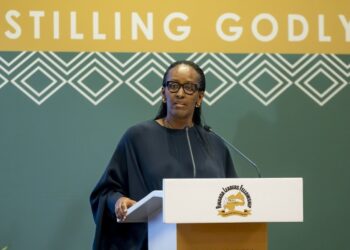


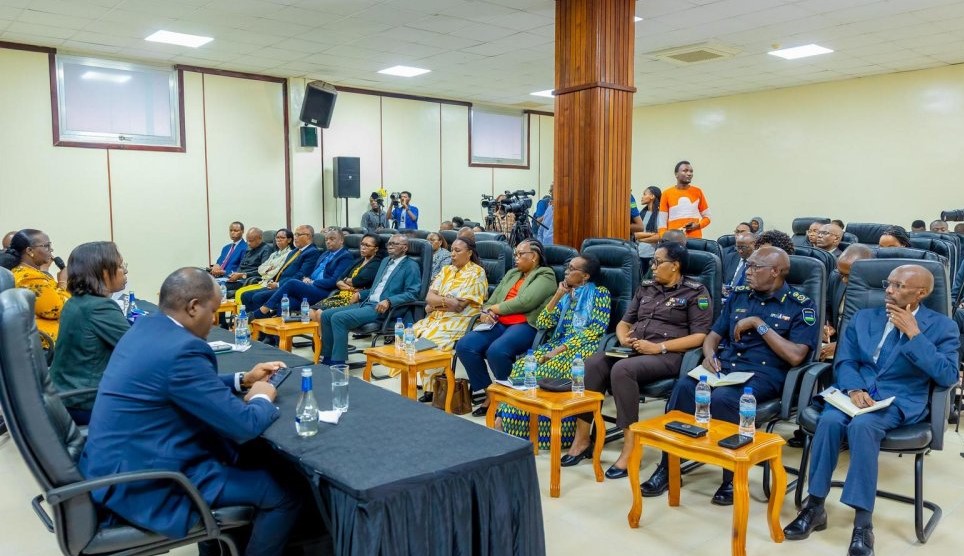
The President of the Supreme Court, Mukantaganzwa Domitilla, revealed significant progress in the fight against corruption within Rwanda’s judicial system, announcing that 14 court officials—including judges, clerks, and other staff—have been prosecuted over the past five years for corruption-related offenses.
Corruption remains one of the most serious crimes in Rwanda, and while efforts to combat it have been vigorous, officials acknowledge that uncovering corruption in the justice sector is no easy task. Nevertheless, various strategies are in place to tackle the issue head-on.
As part of ongoing anti-corruption efforts, Rwanda’s justice sector kicked off a week-long campaign on February 10, 2025, to raise awareness about the fight against corruption. This initiative aims to dismantle networks of “commissioners” who deceive the public into believing that bribing their way through legal proceedings is necessary to win cases.
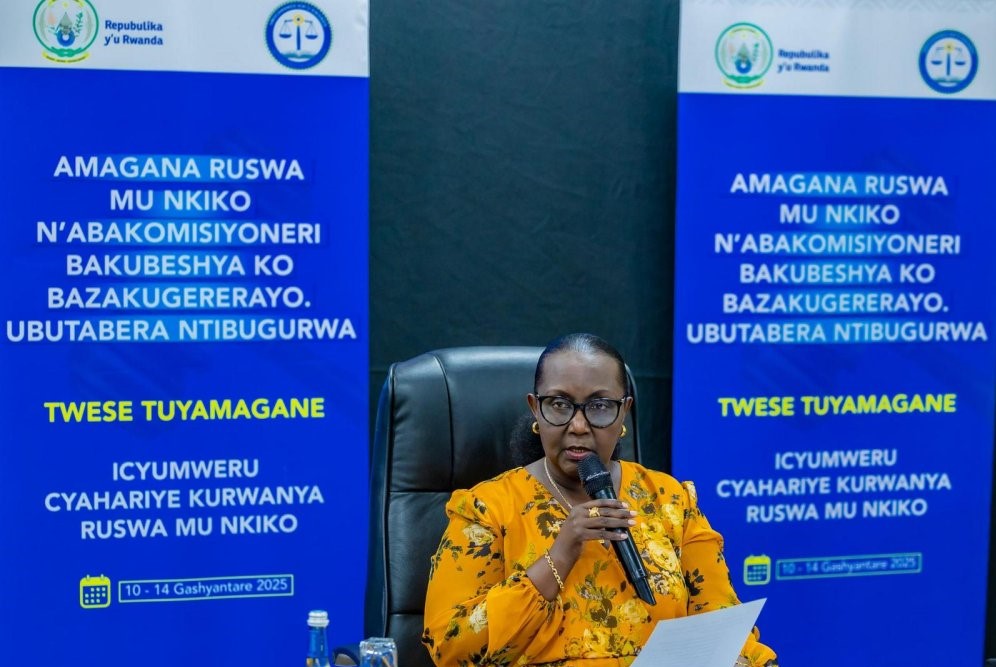
President Mukantaganzwa shared that in recent years, measures such as the adoption of technology, whistleblower protection, and other anti-corruption tools have been implemented within the judiciary. She highlighted the fact that these efforts have led to the sanctioning of 14 judicial employees for corruption over the past five years.
“Rwanda’s justice system is committed to working alongside the public to eliminate corruption from our courts,” said President Mukantaganzwa. “We want to assure Rwandans that justice is not for sale. We urge citizens to ignore those who claim that they can win cases with bribes or those who say they lost their cases because they didn’t pay a bribe. We call on all Rwandans to report corrupt judicial officers and others in the justice sector, so that those caught can be appropriately punished.”
Meanwhile, Col (Rtd) Janot Ruhunga, the Secretary General of the Rwanda Investigation Bureau (RIB), shared that internal corruption prevention has been a key focus of the Bureau. His department recently dismissed 56 employees for corruption, and some of them have even faced imprisonment.
“There were clear signs of corruption, and when we investigated, we found enough evidence for prosecution,” Col Ruhunga explained. “We want to send a strong message that any behavior leading to corruption, even if it seems minor or subtle, will not be tolerated.”
Marie Immaculée Ingabire, Chairperson of Transparency International Rwanda, highlighted that public fear of the justice system is often a barrier to addressing corruption. Many citizens fear the judiciary’s power to punish wrongdoers, which can discourage them from engaging with the system at all. However, when intermediaries, or “commissioners,” manipulate citizens by claiming they can influence judicial outcomes, it becomes a critical issue.
“People often fear judges because they associate them with punishment,” said Ingabire. “There’s this belief that engaging with the justice system is like being summoned by a higher power, and it’s terrifying for many. But those intimidating citizens into giving bribes are the real problem, and we must fight them relentlessly.”
RIB officials clarified that these “commissioners” are not limited to a few bad apples in the judiciary but can include individuals who mislead the public into believing they have connections with judges, only to deceive citizens for financial gain.
Recent statistics from the Rwanda Investigation Bureau show that in the past five years, a total of 4,437 corruption-related cases were investigated, affecting over 9,000 individuals.
The Public Prosecution Office also reported progress, noting that in the last fiscal year, three of its own staff members were held accountable for corruption, with three others still undergoing legal proceedings.
The 2024 Rwanda Bribery Index (RBI) offers a snapshot of the situation across various sectors, revealing that corruption rates in the private sector stood at 13%, while it was reported at 7.8% in the Rwanda Energy Group (REG), 7.2% in the Water and Sanitation Corporation (WASAC), 6.4% at local government levels, and 6% within the judiciary.
Rwanda’s commitment to rooting out corruption in the justice sector remains steadfast, with the government emphasizing transparency, accountability, and the protection of citizens’ rights.