

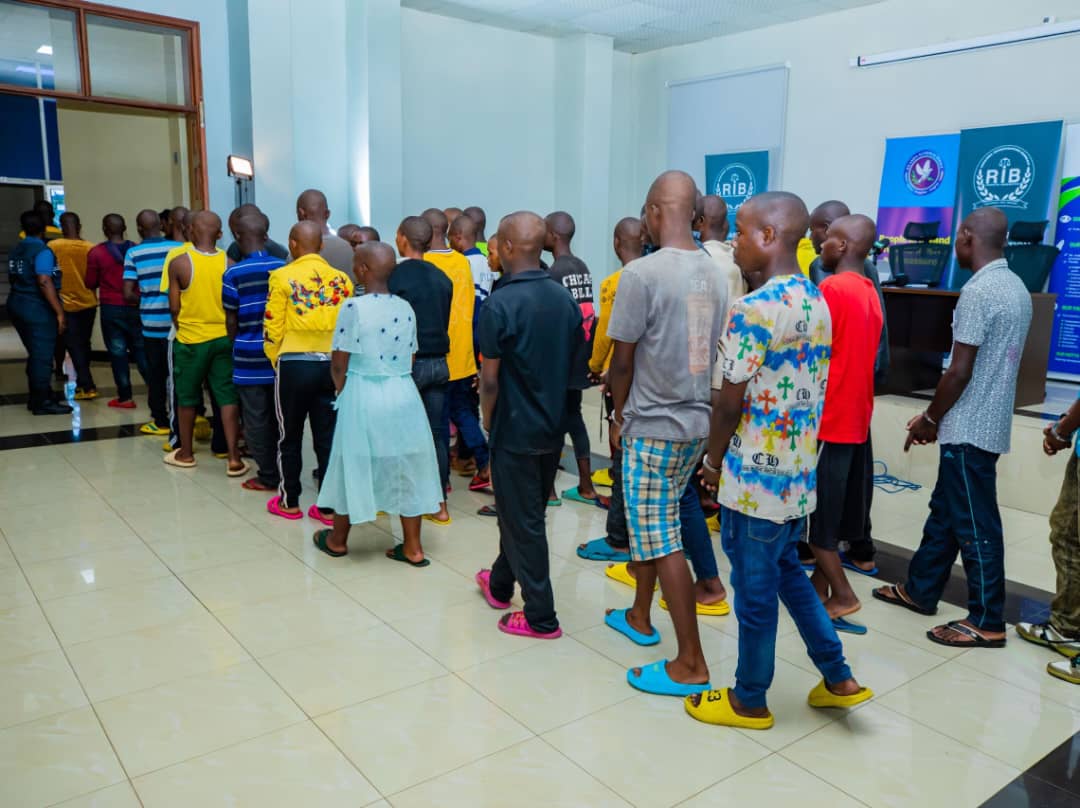
In a significant breakthrough, joint efforts by the Rwanda National Police (RNP), Rwanda Investigation Bureau (RIB), and the Rwanda Utility Regulatory Authority (RURA) have led to the arrest of 45 individuals suspected of being involved in a widespread scam that targeted mobile banking users across the country.
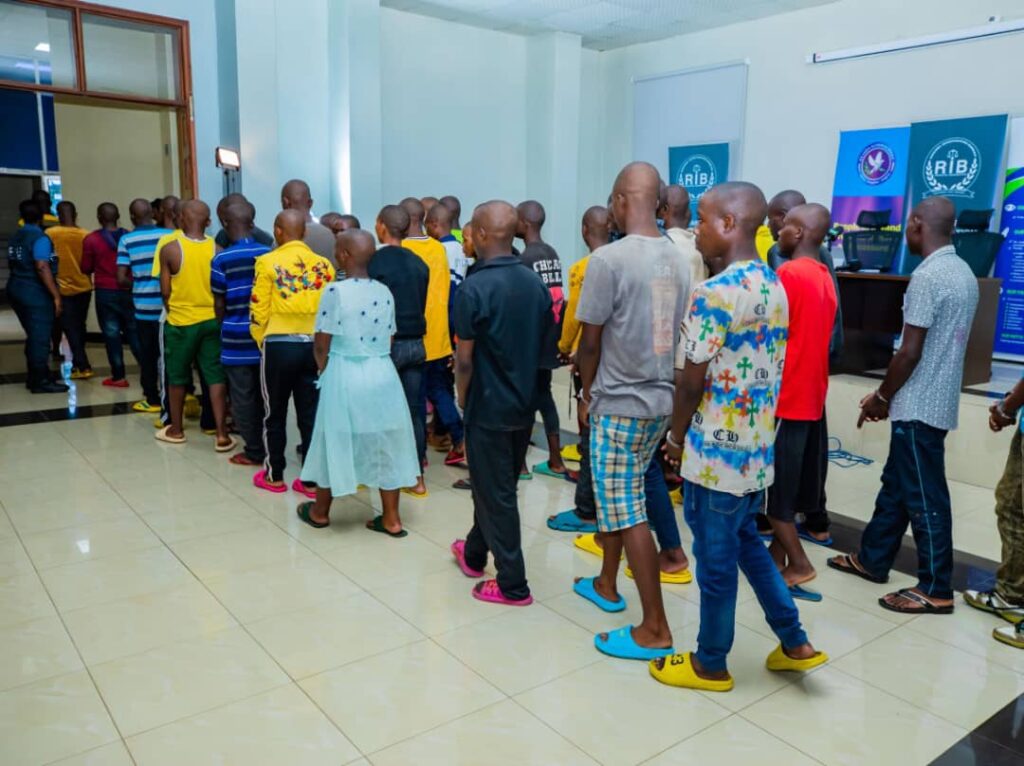
The suspects, including mobile money agents who facilitated the fraudulent transactions, were paraded before the media on Monday, September 9, at the RIB headquarters in Kimihurura, Gasabo District.
The majority of the arrests were made in Nyakarenzo and Nkungu sectors in Rusizi District, where the scam network operated. According to RIB, the ring swindled over Rwf 424 million from unsuspecting victims between January and July this year.
Deceptive Tactics and Tricks
The scam ring used a variety of manipulative tactics to deceive their victims. These included calls and text messages claiming that recipients had won a jackpot, or that their child was involved in an accident and needed urgent medical funds. In some cases, the scammers pretended to be employees of telecommunications companies, offering big rewards but asking victims to send money for “processing fees.”
Others tricked people into believing their mobile banking accounts had been compromised. The scammers would ask victims to enter a code or change their PIN, ultimately gaining access to their accounts and transferring funds to unknown recipients. Some fraudsters even posed as traffic police officers, offering to help people who had failed their driving tests in exchange for money.
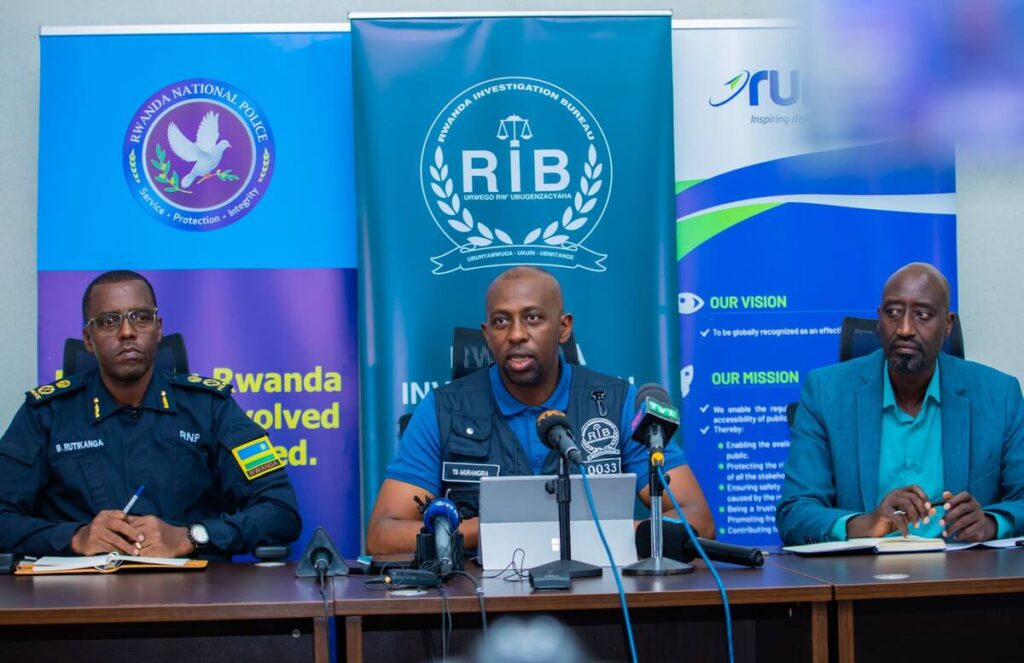
Assistant Commissioner of Police (ACP) Boniface Rutikanga, the RNP spokesperson, urged the public to be vigilant and report any suspicious calls or requests for money. He emphasized that the police had received numerous complaints from victims, many of whom felt embarrassed or fearful of coming forward due to the nature of the scam.
“Police expects you to go through due process if you fail a driving test. Anyone promising to help you with a driving test in exchange for money is trying to defraud you,” ACP Rutikanga said. He also called on people to report any such incidents to help law enforcement dismantle these fraudulent networks.
The individuals arrested face a range of serious charges, including fraud, formation of or joining a criminal association, illicit enrichment, and money laundering. According to RIB spokesperson Dr. Thierry Murangira, the penalties for these offenses can range from two to ten years in prison.
“Uncovering their methods and identifying their locations took considerable time and effort from both law enforcement and the public. These individuals operated with a high level of coordination, with each member playing a specific role in the scam,” Dr. Murangira explained. The investigation is ongoing, with authorities continuing to search for additional individuals involved in these criminal activities.
In an effort to curb such scams, the Rwanda Utility Regulatory Authority (RURA) has implemented stricter regulations for SIM card registration. Charles Gahungu, General Manager of the ICT Regulation Department at RURA, revealed that fraudulent agents were previously registering multiple SIM cards under a single identity, which they later used for scamming.
“Some vendors were registering several SIM cards under one person’s name, which scammers then used to defraud others,” Gahungu explained. Under new guidelines, all SIM card registrations must be completed at a service center with proper identification.
He also urged the public to regularly check the SIM cards registered under their name and to deactivate any they no longer use. “A SIM card is a valuable and personal asset,” Gahungu cautioned. “Today, your SIM card is your bank and gateway to many essential services. If you don’t protect it, you could be exposing yourself to fraud.”
RURA’s new guidelines aim to prevent fraudsters from exploiting loopholes in the SIM card registration system. However, Gahungu stressed that public awareness and caution are key to preventing future scams. He also advised people never to share their SIM cards, as it could lead to significant financial and personal security risks.
With the crackdown on this scam ring, Rwanda’s authorities are sending a clear message that they are committed to protecting citizens from fraud and ensuring that mobile banking remains a secure service for all. As investigations continue, both law enforcement and regulatory bodies are calling on the public to stay alert and report any suspicious activity.