

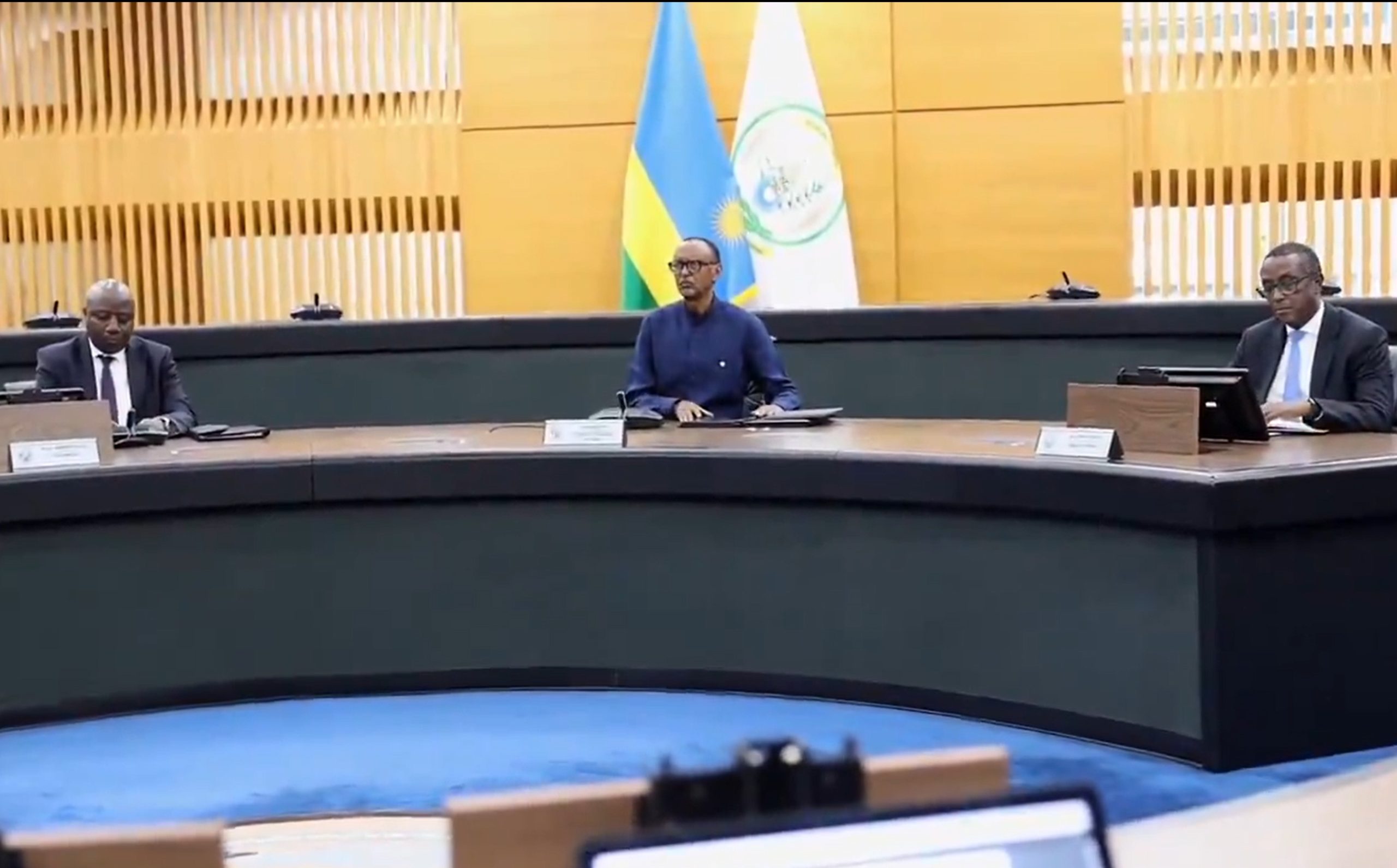
Rwanda’s Cabinet on Thursday approved a raft of major policy and legislative measures, including a landmark Green Taxonomy framework aimed at boosting climate-aligned investment and findings from a new national survey showing a significant drop in poverty levels.
The Cabinet meeting, chaired by President Paul Kagame at Village Urugwiro, received a briefing on the findings of the Seventh Integrated Household Living Conditions Survey (EICV7), which tracks national poverty levels and socio-economic indicators.
According to the survey, 1.5 million Rwandans were lifted out of poverty between 2017 and 2024. The national poverty rate declined from 34.8% to 27.4% during that period, while extreme poverty dropped from 11.3% to 5.4%. Access to electricity also surged, with 72% of households connected to the grid in 2024, up from 34% in 2017, with notable gains in rural areas.
The Cabinet also approved the national Budget Framework Paper and Medium-Term Expenditure Framework for the fiscal years 2025/2026 to 2027/2028. The upcoming national budget will focus on inclusive and sustainable economic growth, with priorities in food security, health, education, infrastructure, water, and electricity access. The government also plans to boost domestic revenue mobilization and increase the private sector’s role in the economy.
Green Taxonomy Approved
In a milestone move toward sustainable development, Rwanda’s Cabinet approved a Green Taxonomy framework expected to unlock $11 billion in climate finance by 2030. The taxonomy offers a standardized classification system that defines environmentally sustainable investments, providing guidance to public and private sector actors.
The taxonomy was developed in collaboration with the Deutsche Gesellschaft für Internationale Zusammenarbeit (GIZ), the Climate Bonds Initiative, and Ambire Global. It aligns with Rwanda’s broader climate finance agenda, including the National Climate and Nature Finance Strategy and the Ireme Invest facility.
Initially, the taxonomy will focus on four key sectors: agriculture, construction, transport, and energy. These sectors are seen as vital to achieving Rwanda’s climate adaptation and mitigation goals under the Paris Agreement. Rwanda first unveiled its taxonomy plans at COP28 in Dubai in 2023.
Road Safety Reforms
The Cabinet also approved a draft law governing road traffic that introduces a merit-based point system to curb reckless driving and improve road safety. Drivers will gain or lose points annually based on their behavior behind the wheel. Accumulated infractions may lead to license suspension or revocation.
The Ministry of Infrastructure, which previously proposed the system in 2023, said the measure will apply to all motorized vehicle operators and aims to encourage safer driving habits through a transparent, tech-enabled monitoring system.
Additional reforms include new standards for driving schools and provisions for automatic vehicle driving testing and licensing. Specific penalties and guidelines for the point system will be outlined in an upcoming ministerial order.
Additional Approvals
The Cabinet approved several other legislative and administrative measures, including:
-
A draft law on compensation for traffic accident victims.
-
Presidential Orders relating to categories and decision-making structures within the Rwanda Defence Force, and on classified military equipment.
-
A Prime Minister’s Order establishing a special status for employees of the Rwanda Atomic Energy Board.
Ministers also announced several upcoming international events hosted in Rwanda:
-
Labour Day will be celebrated on May 1.
-
The Basketball Africa League (BAL) Nile Conference games will take place in Kigali from May 17–25.
-
The first African Continental Security Summit will be held May 19–21.
-
The Africa AgriTech Conference is scheduled for June 9–13.
As Rwanda continues to pursue climate-smart policies and social transformation, the newly approved measures reflect the government’s commitment to sustainable economic growth and improved public service delivery.