

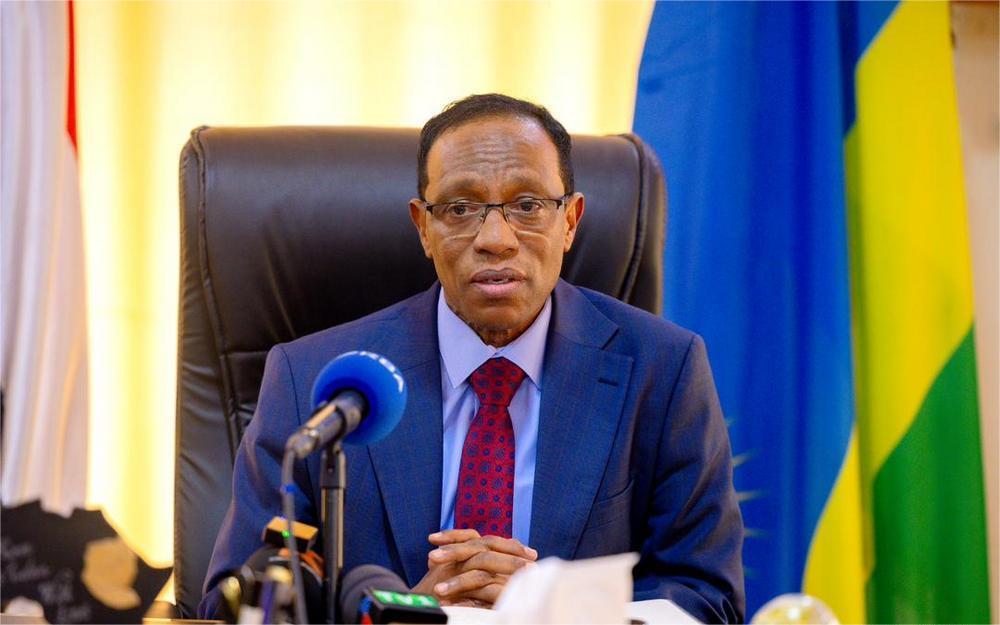
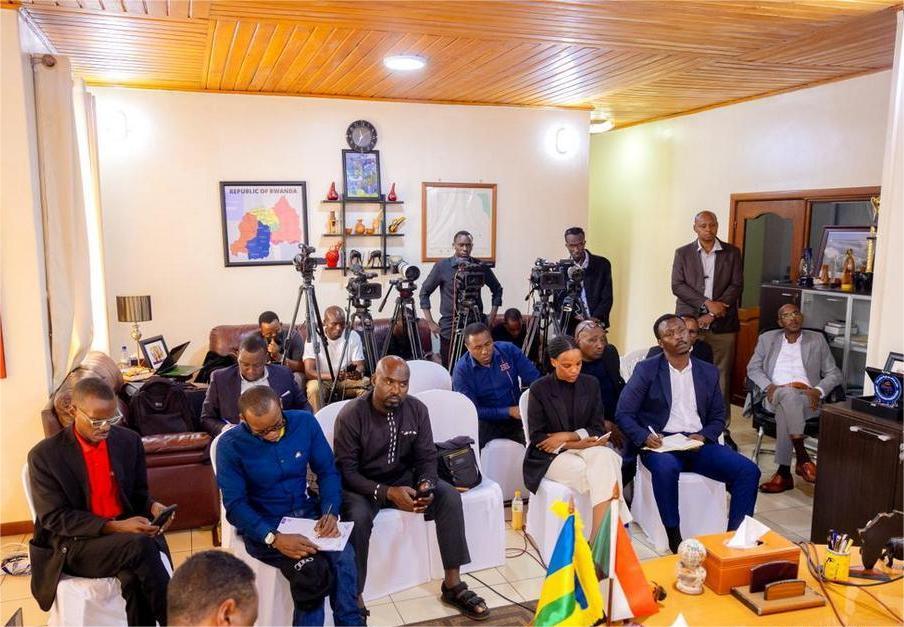
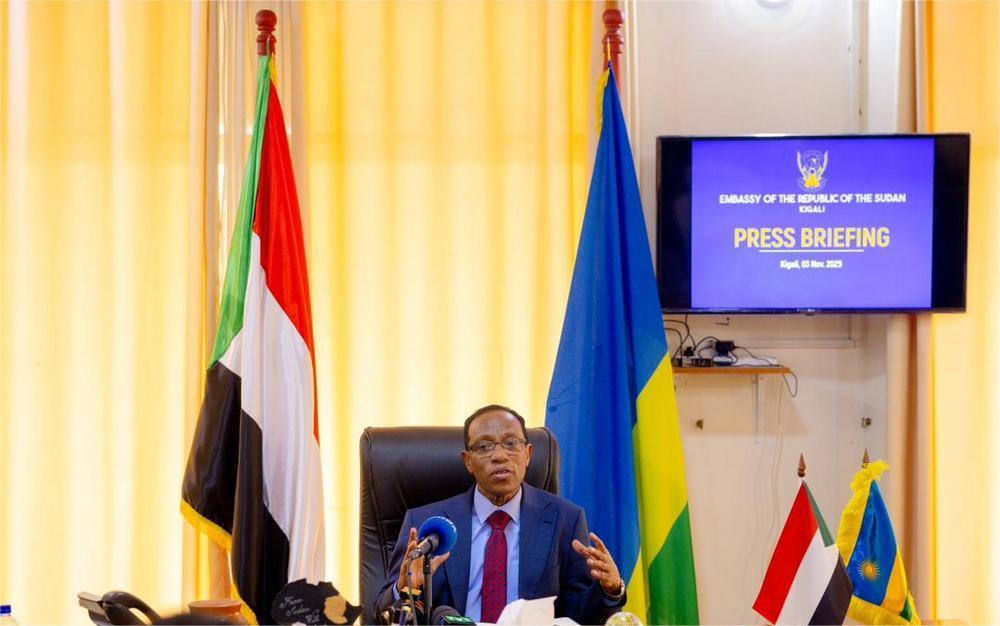
The Ambassador of the Republic of Sudan to Rwanda, H.E. Khalid Musa Dafalla, has issued a strong condemnation of the Rapid Support Forces (RSF), accusing the group of committing war crimes, crimes against humanity, and genocide in El Fasher, the capital of North Darfur.
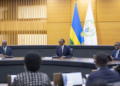
Speaking during a press briefing held in Kigali on November 3, 2025, Ambassador Dafalla described the dire situation in Sudan, which has endured three years of conflict between the national army and the RSF since the war erupted in 2023.
According to the envoy, the ongoing fighting has claimed more than 150,000 lives, displaced over 13 million people, and plunged the country into severe famine conditions. The city of El Fasher remains the epicenter of heavy clashes, with more than 60,000 civilians recently forced to flee their homes.
“The RSF is not just waging war against the Sudanese state, it is committing atrocities that amount to genocide and crimes against humanity. The world must not remain silent,” Ambassador Khalid Musa declared firmly.
He denounced the RSF for conducting ethnic killings targeting Sudanese Africans and for employing starvation as a weapon of war, deliberately blocking humanitarian aid and destroying infrastructure, including hospitals, schools, power plants, and water facilities.
The Ambassador further revealed horrifying details of a massacre on the night of October 26, 2025, in El Fasher, where RSF fighters allegedly killed more than 3,000 civilians, including patients in hospitals, tortured and buried people alive, and used vehicles to crush victims. “That night was a humanitarian catastrophe,” he lamented.
Ambassador Khalid Musa Dafalla also claimed that the RSF receives financial, logistical, and military support from several foreign countries, including the United Arab Emirates (UAE), which he accused of supplying the group with modern weaponry and drones. He cited reports among them one from The Wall Street Journal revealing that the RSF is in possession of weapons manufactured in France, the United Kingdom and the United States.
He added that the RSF employs around 10,000 foreign mercenaries from 17 countries, including Colombia, Ukraine, Ethiopia, and South Sudan, who are fighting alongside them using advanced armored vehicles, tanks, and long-range drones rarely seen in African conflicts.
“This genocide is not being carried out by the RSF alone,” he said. “It is being supported by powerful countries and networks of mercenaries. This must stop.”
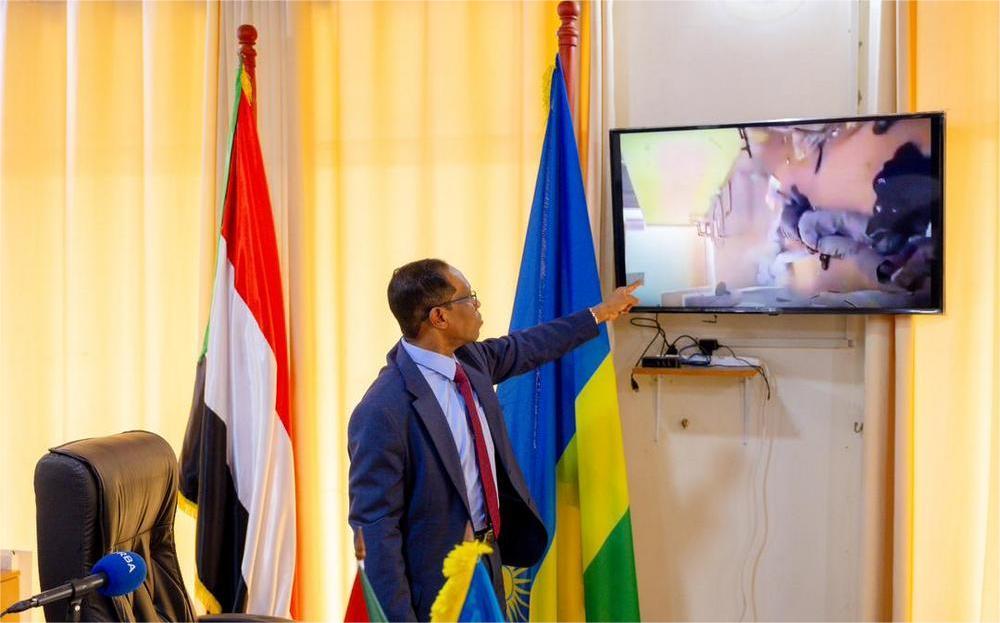
The envoy called on the United Nations Security Council to hold the RSF accountable and bring justice to Sudanese victims, emphasizing that mere condemnation by the international community is insufficient.
“The world expresses concern, but that is not enough. The Sudanese people deserve justice and transparency. We are waiting to see accountability for these crimes,” he said.
Ambassador Khalid Musa Dafalla welcomed the appointment of Ugandan President Yoweri Kaguta Museveni as the African Union’s mediator in the Sudanese conflict and urged the AU to restore Sudan’s full membership, asserting that the legitimate government remains dedicated to restoring peace, unity, and a single national army under civilian authority.
He also expressed hope that President Paul Kagame of Rwanda could play a meaningful role in mediation efforts, given Rwanda’s remarkable experience in post-genocide reconciliation.
“President Kagame’s leadership in rebuilding a united nation after the 1994 Genocide against the Tutsi is a powerful example. Sudan believes such experience can inspire our own reconciliation process,” he noted.
Drawing parallels with Rwanda’s post-conflict recovery, the Ambassador said that once the war in Sudan comes to an end, the government plans to reintegrate former RSF combatants into regular civilian life, while those responsible for crimes will face justice. He clarified that this reintegration is not about merging the RSF as an institution into the national army. Instead, it will allow individuals who did not commit crimes and wish to continue serving as soldiers to join the national army as individuals, while others who renounce violence will reintegrate as ordinary citizens.
He also expressed heartfelt gratitude to Rwanda for hosting thousands of Sudanese refugees and more than 3,200 Sudanese students who make up about 20% of all international students in the country and highlighted that Sudanese investors have surpassed 20 million USD of investment in Rwanda.
“Rwanda stands as a shining example of resilience and reconciliation. Sudan hopes to walk a similar path once peace is restored,” he concluded.
The Ambassador reaffirmed his government’s commitment to ending the war, rebuilding national institutions, and securing justice for victims of RSF atrocities.