

Rwanda is deepening its efforts to promote national unity and reconciliation by emphasizing the traditional Rwandan value of ubudaheranwa, or forgiveness, a principle that encourages citizens not to be consumed by past crimes or conflicts.
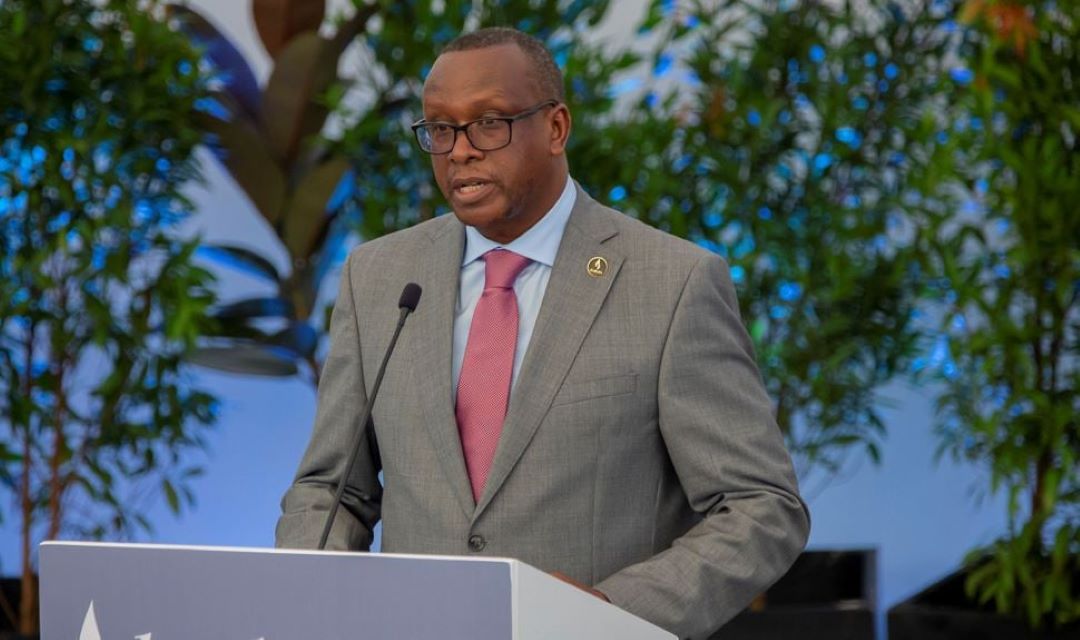
Dr. Jean Damascène Bizimana, Minister of Unity and National Dialogue, explained that ubudaheranwa was deliberately promoted by the government after the 1994 genocide against the Tutsi to help survivors and perpetrators coexist peacefully.
“The value of forgiveness introduced by the government does not remove the need for justice between perpetrators and survivors, but it allows Rwandans to continue living together in unity,” Dr. Bizimana said. He emphasized that reconciliation requires perpetrators to acknowledge their crimes before seeking forgiveness, reinforcing both justice and healing.
Following the genocide, Rwanda faced the enormous task of rebuilding a society fractured by violence. The Gacaca courts, which concluded their work after trying nearly 2 million genocide suspects, highlighted the scale of the challenge. “It was impossible to imprison over two million people. The solution was to promote justice that also allowed reintegration,” Dr. Bizimana said.
He explained that reconciliation involved creating avenues for perpetrators to admit wrongdoing, face proportional penalties, and seek forgiveness, enabling them to reintegrate into the Rwandan community. “Asking for forgiveness means acknowledging the harm done and seeking reconciliation with those affected,” he said.
The ministry notes that Rwanda’s post-genocide population includes many who were not involved in the genocide, as well as children born after 1994. Yet the psychological wounds of the past remain deeply felt. “A child whose parent committed genocide carries inherited trauma,” Dr. Bizimana said. “Forgiveness allows them to live without inheriting guilt or becoming trapped in the violence of previous generations.”
The principle of ubudaheranwa extends to all Rwandans affected by historical violence, including survivors, their descendants, and those returning from exile or conflict zones. According to Dr. Bizimana, it helps citizens navigate the trauma of displacement, loss, or family violence while fostering personal growth and national development.
Uwizeye Jean de Dieu, a unity and reconciliation advocate, added that failure to embrace forgiveness often stems from lingering trauma and extremist ideologies. He warned that children of perpetrators left unsupported may adopt destructive behaviors, while children of survivors may struggle with feelings of insecurity or fear.
“Forgiveness is not forgetting, but a pathway to healing and coexistence,” he said. “It strengthens the bonds that unify our nation and ensures Rwanda’s history does not dictate the future of its people.”
Rwanda’s commitment to ubudaheranwa, alongside reconciliation and justice, underscores the government’s ongoing mission to build a cohesive society where past atrocities do not define future generations.