

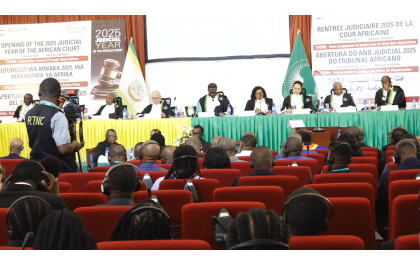
The governments of Rwanda and the Democratic Republic of Congo (DRC) are currently involved in a high-stakes legal battle at the African Court on Human and Peoples’ Rights (AfCHPR), located in Arusha, Tanzania. The case, which began on February 12, 2025, is expected to last for two days.
At the heart of the case, the DRC accuses Rwanda of supporting the M23 rebel group, which has been actively involved in the conflict in the eastern DRC since November 2021. The DRC claims that Rwanda’s alleged support for the group is contributing to widespread human rights violations in the North Kivu region, further intensifying the ongoing crisis.
This legal dispute dates back to August 2023, when M23 fighters made significant territorial gains, pushing back the DRC’s military forces. At that time, relations between Rwanda and the DRC were already strained, and the tensions were rising as both countries exchanged accusations.
Rwanda, however, has firmly denied the allegations. The Rwandan government has consistently maintained that it does not support the M23 rebel group, emphasizing that the fighters are Congolese nationals defending their own rights in the region. Rwanda’s Minister of Justice and Attorney General, Dr. Emmanuel Ugirashebuja, pointed out several flaws in the DRC’s case, including the fact that the DRC submitted additional information last year without providing proper explanations or context.
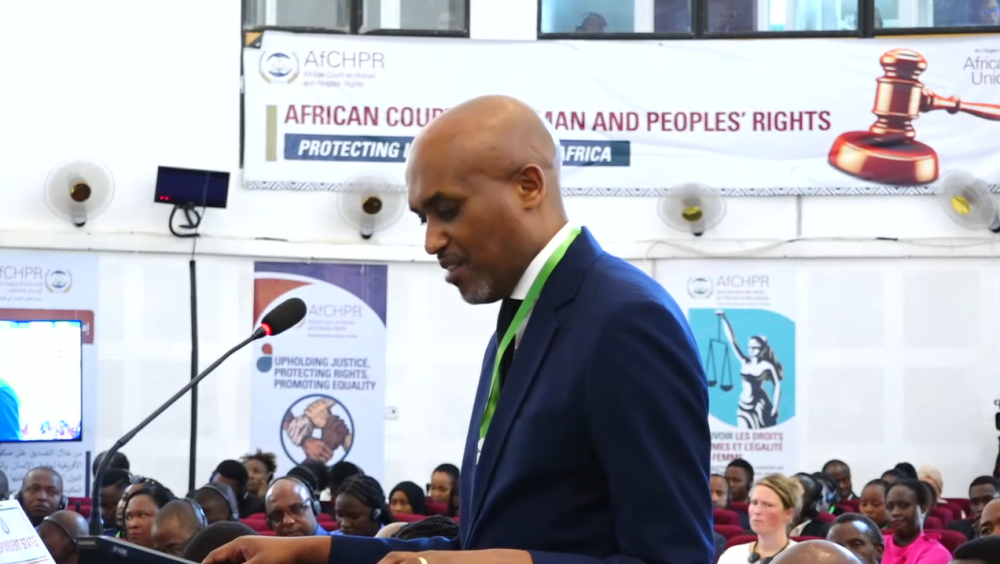
Dr. Ugirashebuja also shared concerns over what he described as an attempt to influence the court. He revealed that in August 2024, a member of the DRC government visited the court’s headquarters in Arusha. The minister suggested that this visit might have been intended to intimidate the judges, in an effort to sway the outcome of the case.
“This was not a diplomatic move,” said Dr. Ugirashebuja. “It seemed like an attempt to intimidate the judges and influence their decision.”
Rwanda’s legal representative, Professor Dapo Akande, took a strong stance, arguing that the African Court does not have jurisdiction over this case, as it typically handles individual cases rather than disputes between countries. He explained that the court’s mandate is limited to cases involving crimes committed within the territory of the country being accused.
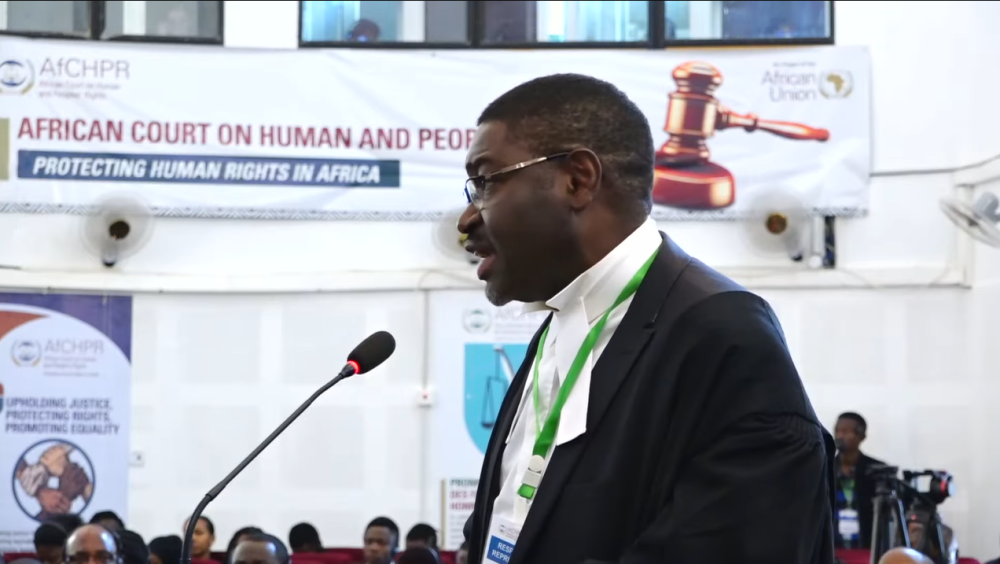
“We firmly believe that this case is outside the court’s jurisdiction,” Professor Akande said. “The alleged violations should have taken place on the territory of the accused country for the court to have jurisdiction.”
The Rwandan delegation also pointed out that the DRC’s case seems designed to mislead the court and avoid diplomatic solutions aimed at securing lasting peace in the volatile eastern DRC. They argued that the real focus should be on finding a diplomatic resolution to the crisis, rather than prolonging legal proceedings.
Minister Ugirashebuja added that, apart from the case being dismissed, he believes the African Court should not have even entertained the matter in the first place.
This case, which involves ten judges, follows another legal challenge brought by the DRC against Rwanda in September 2024 at the East African Court of Justice (EACJ). Like the current case, it stems from the ongoing conflict that began in November 2021, further highlighting the complexity and long-standing nature of the tensions between the two countries.
As the case unfolds, all eyes are on the African Court to see how it will rule on this highly contentious issue, and whether it will help move the two nations closer to resolving the broader crisis that continues to affect millions of people in the region.