

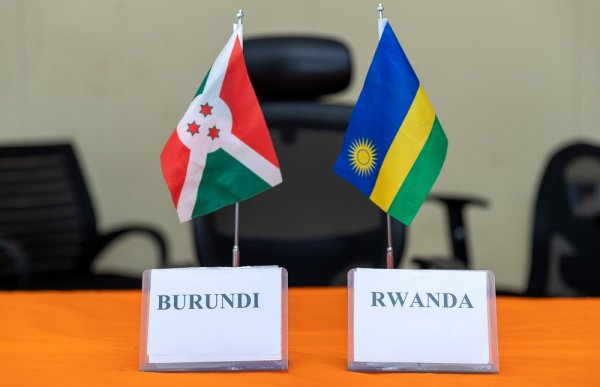
Burundi’s stated commitment to restoring relations with neighboring Rwanda has been repeatedly undermined by contradictory messages and sharp rhetoric from senior officials, raising doubts about whether meaningful reconciliation is truly within reach.
Relations between the two countries have remained strained since late 2023, when Burundi accused Rwanda of backing the RED-Tabara armed group operating in eastern Democratic Republic of Congo. Rwanda has consistently denied the allegations, saying it has no interest in destabilizing Burundi and does not collaborate with Burundian rebel groups.
Since the breakdown, several mediation efforts have been launched, including talks between the two countries’ foreign ministers in Zanzibar, Tanzania, in July 2024. Each round of dialogue has been followed by public statements expressing optimism that ties could be repaired.
That optimism, however, has often been short-lived.
President Evariste Ndayishimiye has repeatedly accused Rwanda in public forums — including international media interviews — of seeking to undermine Burundi’s security. Analysts say such remarks have weakened trust and stalled progress made behind closed doors.
Former Burundian Foreign Minister Albert Shingiro, who played a central role in re-engaging Rwanda in 2022, frequently sought to reassure Burundians that coexistence with Rwanda was both inevitable and achievable. “No rain lasts forever,” he once said, signaling hope for improved relations.
Rwanda’s Foreign Minister Olivier Nduhungirehe said in May 2025 that discussions with Shingiro had reflected genuine willingness on both sides to normalize relations, but that progress was often undone by public accusations from Burundi’s presidency.
“The problem is that sometimes the Burundian president gives interviews accusing Rwanda, which sets us back,” Nduhungirehe said, adding that citizens in both countries want improved ties.
Shingiro’s dismissal on Aug. 5, 2025, marked a turning point. He was replaced by Edouard Bizimana, a former academic known for combative commentary on social media. Before joining the Cabinet, Bizimana had openly attacked Rwanda online and dismissed concerns about the FDLR rebel group, which Rwanda considers a major security threat in the region.
In July 2025, Bizimana publicly declared that the FDLR was no longer a problem and accused Rwanda of using it as a pretext to exploit mineral resources in eastern Congo — remarks that drew criticism from civil society groups.
Pacifique Nininahazwe, head of the Burundian rights group FOCODE, warned that Bizimana’s confrontational style risked pushing Burundi deeper into diplomatic isolation. He described the minister’s language as abusive and unfit for delicate international negotiations.
Tensions widened further on Jan. 3, 2026, when Bizimana accused Qatar on the social media platform X of using its influence and financial power to block U.S. sanctions against Rwanda. The post was swiftly deleted amid backlash.
President Ndayishimiye later distanced himself from the remarks, publicly praising Qatar’s role in peacebuilding and development and calling for clarity over what he described as “inappropriate statements.”
Observers say the episode exposed a deeper problem: the absence of a coherent foreign policy line in Bujumbura. Conflicting messages from the presidency and the foreign ministry, they argue, have eroded Burundi’s credibility as regional mediators work to reduce tensions in eastern Congo and the wider Great Lakes region.
As diplomatic initiatives continue, Burundi’s shifting tone has left both allies and neighbors uncertain whether calls for peace signal a genuine strategy — or simply another reversal waiting to happen.