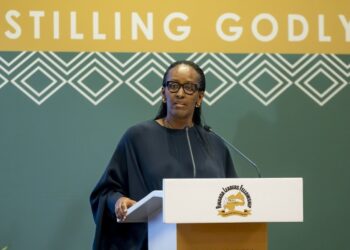


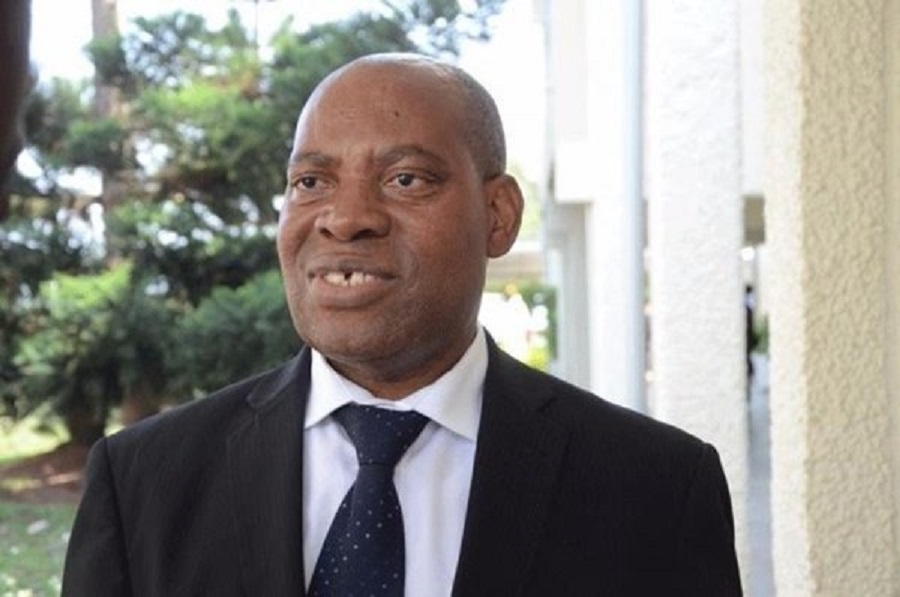
Senate President Dr. Francois Xavier Kalinda said Friday that Pan-Africanism holds the potential to shape the future Africa envisions for itself.
Speaking during a discussion with members of Rwanda’s Parliament, Kalinda emphasized the importance of African unity and the role lawmakers can play in advancing development across the continent. The meeting was part of preparations to mark the 62nd anniversary of Africa Liberation Day, observed annually on May 25.
“Pan-Africanism reminds us that we have the power to choose the future we want for Africa,” Kalinda said. “It starts with changing the mindset of self-doubt and the belief that others must solve our problems.”
Kalinda urged Africans to abandon colonial legacies and reject externally imposed divisions.
“We must stop seeing ourselves through the colonial lens, through artificial borders and ideologies imposed by non-Africans,” he said.
He also called on leaders to promote positive mindsets among citizens and challenged the narrative that Africa lacks the resources to drive its own development.
“Africa has lost valuable time because of the idea that others must help us or think for us,” he said.
Tito Rutaremara, chairperson of the Rwanda Elders’ Advisory Forum, said dismantling colonial influences should begin with education at home. He emphasized that Rwanda’s national curriculum is capable of preparing students for global opportunities.
“Some people say their children are in the Cambridge curriculum. Cambridge is just a small place in the U.K. with a university,” Rutaremara said. “If a parent can afford a good teacher, they can use the Rwandan curriculum, and the child will still be able to succeed abroad.”
He also criticized parents who discourage the use of Kinyarwanda, the country’s native language.
“Don’t be surprised if you punish your child for speaking English while they can’t speak Kinyarwanda,” he said. “Walk through Kigali and you’ll hear children speaking English, even to their parents.”
Hon. Alodie Iradukunda, Rwanda’s representative to the East African Legislative Assembly, said youth continue to face barriers to information access, particularly due to high internet costs.
“There are still challenges like the cost of communication that prevent young people from accessing information,” she said.
Iradukunda suggested that regional collaboration could unlock greater progress, particularly in areas such as artificial intelligence (AI).
“AI requires significant investment,” she said. “While Rwanda has made progress, why should it tackle it alone? Why not do it together as the East African Community?”
Vincent Karega, Rwanda’s special envoy to the Great Lakes region, said African unity remains underdeveloped, even as the continent celebrates its natural resources.
“We celebrate that we’ve found gas, oil, and minerals. But rarely do we celebrate turning these resources into real economic value,” he said.
Karega added that the African Union has made progress but still faces challenges, especially in countries struggling with ethnic divisions.
“While others are thinking about AI and advanced technology, we still face governance issues based on ethnic differences,” he said. “Pan-Africanism must be reinforced with greater strength and urgency.”
Africa Liberation Day will be celebrated across the continent on Saturday, May 25, marking 62 years since many African nations began gaining independence.