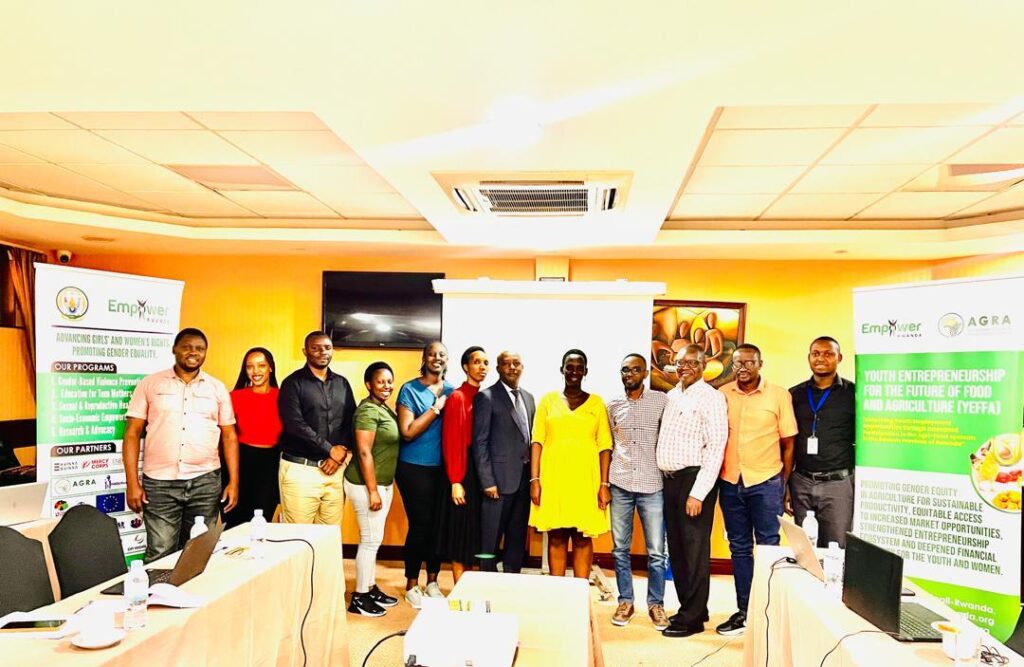


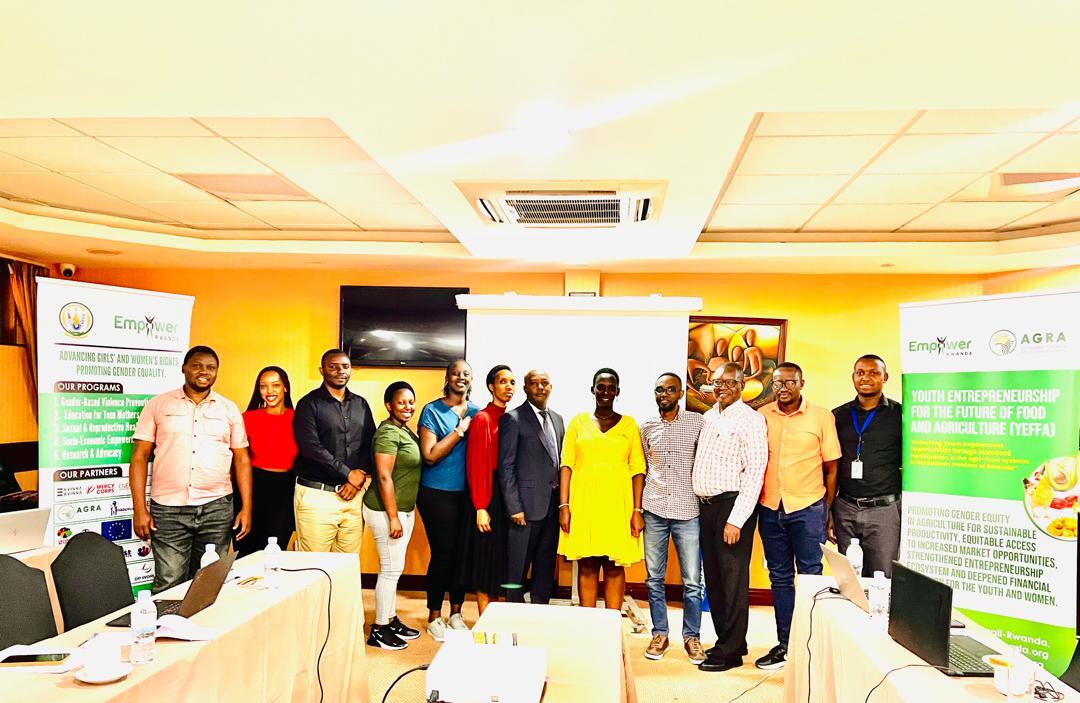
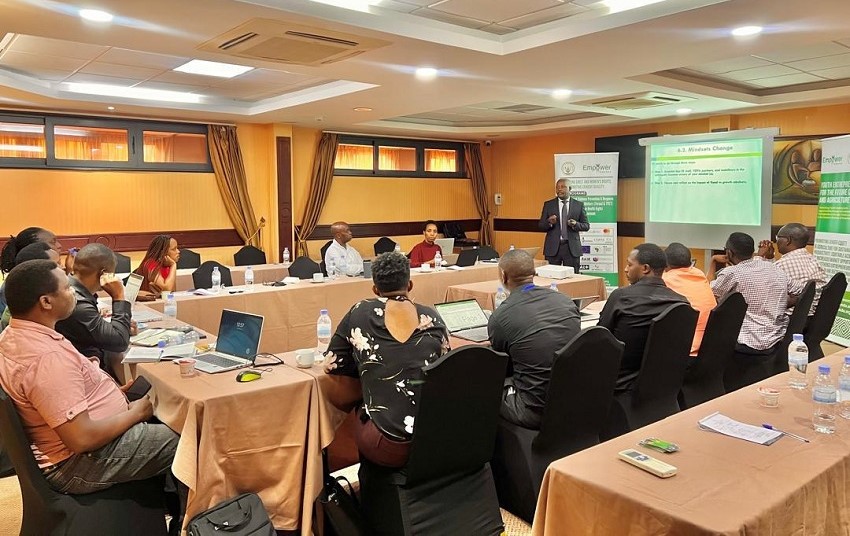
Empower Rwanda, a women’s rights organization with support from Mastercard Foundation through AGRA Rwanda organized a validation workshop for the YEFFA project baseline survey findings and gender-sensitive approaches which must be integrated in the learning materials for all project partners.
The workshop focused on two critical reports—the YEFFA Project Baseline Survey and the Integration of Gender-Sensitive Approaches in YEFFA Learning Materials. It was an important moment to ensure that the project is on track to promote gender equality and youth participation especially in Rwanda’s agricultural sector.
Dr. Olivia Promise Kabatesi, Founder and Country Director of Empower Rwanda, emphasized that the workshop wasn’t just about reviewing reports. It was about ensuring that the project truly meets the needs of vulnerable young women while ensuring their full participation and productivity.

“We want to create a space where young women—especially teenage mothers and women with disabilities—are not left behind in agricultural value chains,” Dr. Kabatesi said. “These voices are often sidelined, and it’s our mission to lift them up.”
The YEFFA project aims to empower 300,000 youth across Rwanda, with a focus on ensuring that 70% of the beneficiaries are women. This is especially important in the Eastern Province, where teenage pregnancies and child abuse rates are high.
“Many young girls here have limited opportunities. Our work with YEFFA project focuses on helping teenage mothers, out-of-school girls, and young women with disabilities to break the cycle of vulnerability, enable their access to the land use and equal share of agricultural retruns,” Dr. Kabatesi explained.
A major focus of the workshop was how economic empowerment can reduce gender-based violence (GBV). Statistics show that 96.5% of GBV victims are women, and 97.5% of perpetrators are men. Empower Rwanda believes that by engaging young women especially young mothers in agriculture, they can help reduce their vulnerability to abuse. “When women have control over their finances and are no longer dependent on their abusers, they’re stronger and more independent,” Dr. Kabatesi said.
The YEFFA Project Baseline Survey revealed that many young women face significant barriers. In rural areas, 65% reported limited access to agricultural resources. Additionally, 73% of women struggled with financial inclusion. These challenges are particularly harsh in rural areas like the Eastern Province. “The survey gives us a clear starting point and helps us focus our efforts on where the need is greatest,” Dr. Kabatesi said.
The survey also highlighted the gender gap in agriculture. Women are underrepresented in decision-making roles, and interventions are needed to close these gaps. “The YEFFA project is working to address these disparities,” Dr. Kabatesi said.

Another key topic was ensuring that YEFFA’s learning materials are gender-sensitive. Some materials already addressed gender issues, but others were found to use male-centric language or overlooked the unique challenges different categories of women face in agriculture. Dr. Kabatesi stressed the importance of having gender-responsive learning tools. “If our training materials don’t reflect the realities of young women, we miss an opportunity to support them fully,” she said.
The workshop also resulted in several key recommendations to make the learning materials more inclusive and gender-resonsive . These included using gender-neutral language, highlighting successful women in agriculture, and addressing issues like financial literacy and land access. These changes aim to ensure that women not only gain technical skills but also feel empowered to benefit from agricultural produce and overcome barriers created by societal norms and stereotypes.
The workshop also allowed the six YEFFA partner organizations—AKA, ADC, Abusol Ltd, RYAF, YEAN, and Empower Rwanda—to collaborate and share insights on how to collaboratively attain the project objectives. One pressing topic was the inclusion of women with disabilities who are mostly hard to reach and usually not given equal opportunities. Dr. Kabatesi emphasized, “We must ensure that women with disabilities have equal access to training, resources, and opportunities offered by YEFFA project”
There was a strong sense of commitment to action by all partners in ensuring that all identified gender gaps are bridged and the gender sensitive approaches integrated in their respective project learning materials. The baseline survey data and recommendations for more gender-sensitive learning materials will guide the next steps and will also help to measure the impact created by project interventions. Dr. Kabatesi said, “Now we must put these findings into action. We need strategies that lead to real, measurable change resulting from young women’s participation in agriculture, especially the most vulnerable.”
With a focus on empowering youth especially young women (70% of the total project particpations), especially teenage mothers and women with disabilities, the YEFFA project is set to make a lasting impact in Rwanda. By providing economic opportunities and creating a more inclusive agricultural sector. 
Empower Rwanda is helping to build a brighter, more equitable future for the youth especially young women with compounded vulnerabilities.