


Rwanda’s Biomedical Centre (RBC) has announced that the country will soon begin offering brachytherapy, a more advanced form of cancer treatment, as part of ongoing efforts to eliminate cervical cancer by 2027.
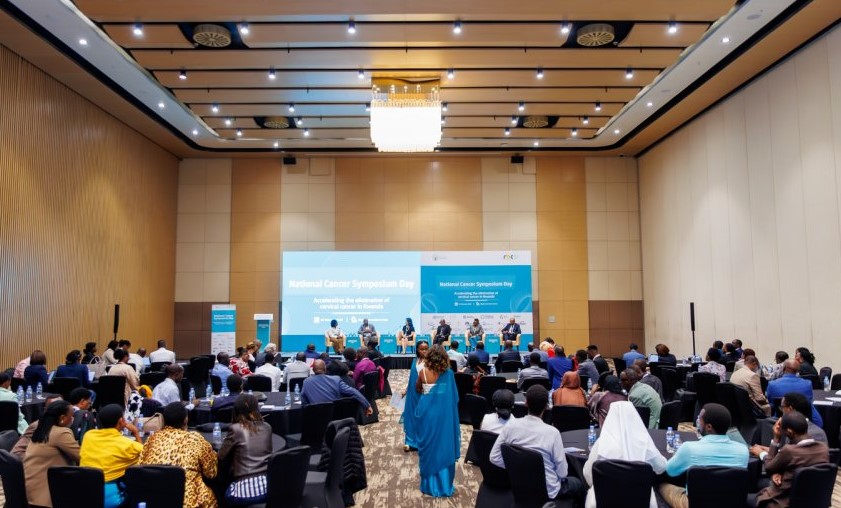
The announcement was made during the annual national review meeting on progress toward eliminating cervical cancer, held in Kigali on Wednesday, February 3, 2026. The meeting was timed to coincide with the world’s annual commemoration of World Cancer Day on February 4.
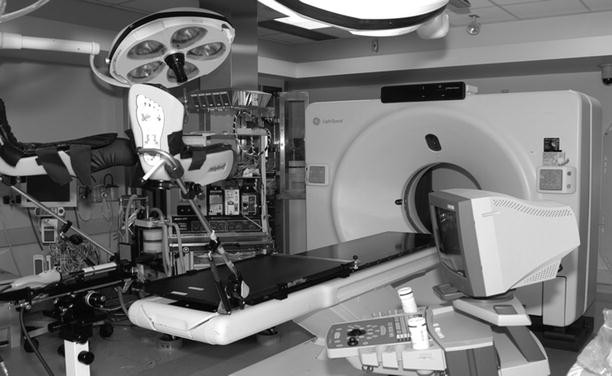
Dr. Maniragaba Théoneste, director of the cancer control unit at RBC, said that the only radiotherapy option currently available in Rwanda is external beam radiotherapy, provided at Butaro Hospital and Kanombe Military Hospital. In this method, patients lie on a treatment table while a machine positioned outside the body directs radiation toward the cancer site.
Brachytherapy, by contrast, is a form of radiotherapy in which a radiation source is inserted directly into the body, close to the tumor, allowing the treatment to deliver high doses of radiation precisely where it is needed.
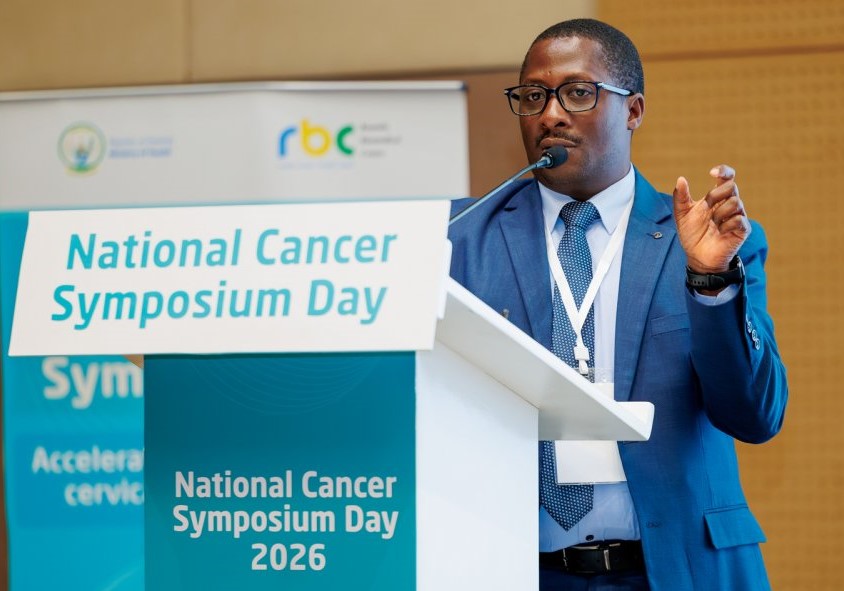
“The advantage of this method is that it reduces the risks associated with radiation passing through healthy tissue and increases the chances of recovery because all the treatment energy targets the affected organ,” Dr. Maniragaba said.
He added that medical staff who will administer brachytherapy have already been trained at Kanombe Military Hospital, and that the treatment will be rolled out soon.
“This service is now available, and shortly after assessing patients who are ready for treatment, it will be offered under health insurance, as is the case with radiotherapy,” he said.
Rwanda aims to eliminate cervical cancer by 2027. RBC says the country is on track, with 90% of women eligible for vaccination already vaccinated, and 81% of women with symptoms being screened.
However, the program requires $27.8 million to achieve its goals. Funding is still being mobilized from the government and health sector partners.
RBC continues to urge the public to get screened early, noting that late diagnosis significantly reduces the chances of successful treatment and may render even strong national health efforts insufficient to save lives.