

The Rwandan Ministry of Health (MINISANTE) has confirmed that all individuals who contracted the Marburg virus—a severe hemorrhagic fever—have now fully recovered. However, health officials stressed that prevention and containment measures remain in place to prevent further spread of the virus.
The update, provided in the Ministry’s weekly report on November 8, 2024, covered the status of the Marburg virus from November 1 to November 8. During this period, 1,390 tests were conducted, with no new cases identified. Despite this encouraging development, the Ministry emphasized that efforts to monitor and control the virus remain a top priority.
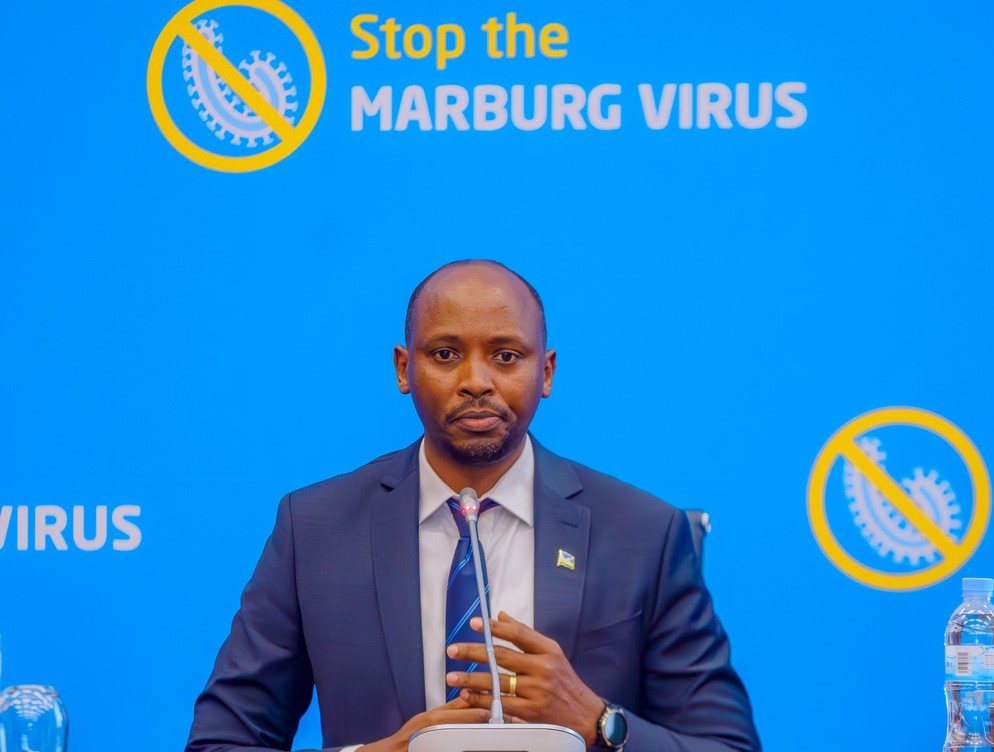
In a recent media briefing, Health Minister Dr. Sabin Nsanzimana explained that the Ministry is focusing on monitoring individuals who had close contact with infected patients and ensuring ongoing treatment to prevent any new fatalities. He expressed cautious optimism that the virus could be eradicated in Rwanda through these measures.
“Our priority is to monitor contacts of those infected and ensure they receive the necessary care. We are also tracking down every person who came into contact with the first confirmed patient and providing vaccines to interrupt the virus’s transmission,” Dr. Nsanzimana said. “Rigorous screening measures are in place at borders, Kigali International Airport, and other key checkpoints to contain any potential spread.”
Dr. Nsanzimana also highlighted the importance of vaccination for healthcare workers, noting that protecting those on the frontlines is essential. “Healthcare workers treating patients are at risk, and we’ve prioritized their protection through vaccination to ensure they can work safely.”
The Ministry is also advising recovered patients to take precautions against possible viral transmission. Although all patients who contracted the virus have recovered, Dr. Nsanzimana cautioned that the Marburg virus can remain in certain body fluids for extended periods—up to a year or more. As a result, recovered patients are urged to avoid unprotected sexual activity and breastfeeding to minimize the risk of transmission.
“Recovered individuals should refrain from unprotected sexual activity until follow-up tests confirm the virus has been completely cleared,” Dr. Nsanzimana explained. “We’re also monitoring patients for several months to ensure the virus is no longer present in their bodily fluids, particularly in semen, where it can persist longer.”
Since the first Marburg virus case was confirmed in Rwanda on September 27, 2024, the country has experienced a total of 66 confirmed infections, including 15 deaths and 49 recoveries. As of November 4, two patients remain under medical care.
Symptoms of the Marburg virus include high fever, headache, muscle pain, vomiting, and diarrhea. Anyone experiencing these symptoms is urged to seek medical assistance promptly.
The Ministry of Health continues to monitor the situation closely and remains committed to preventing further infections as it works toward eradicating the virus in Rwanda.