


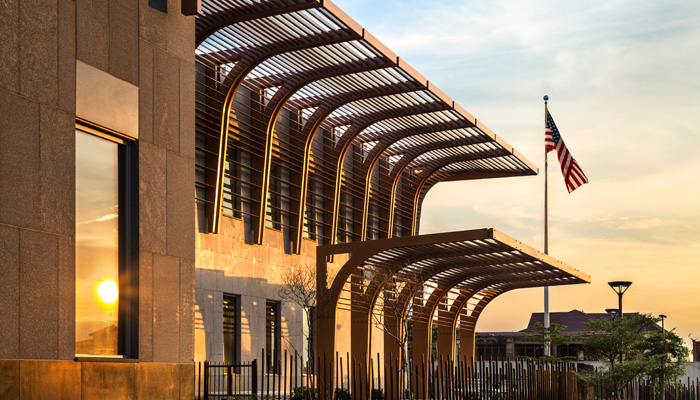
Several American government run institutions in Burundi will temporarily close beginning Feb. 3 after a partial shutdown of the U.S. government, the U.S. Embassy in Burundi announced.
In a statement posted on X on Feb. 2, the embassy said the closures would remain in effect until further notice. “American institutions will close starting tomorrow until we receive further communication regarding the government shutdown. We will inform you when we reopen,” the statement said.
The embassy emphasized that its own operations will continue as normal. The closures affect nonessential U.S.-managed facilities such as American libraries, cultural centers and similar institutions operating in Burundi.
The announcement followed an earlier message from the embassy indicating it would scale back activity on its social media platforms, limiting posts to essential updates only. Several U.S. embassies across Africa have issued similar notices, citing the impact of the shutdown on communications and nonessential services.
The shutdown began Feb. 1, 2026, after Congress failed to pass a funding bill covering several federal agencies. While departments providing essential services continue to operate, others were forced to suspend noncritical functions.
The budget impasse centers on disagreements over funding and oversight of the Department of Homeland Security, particularly its handling of immigration enforcement. The dispute intensified following protests in Minneapolis, Minnesota, after Immigration and Customs Enforcement officers were involved in the deaths of two civilians.
Democrats in Congress have called for reforms to ICE’s operations, arguing that changes are needed to prevent similar incidents. Republicans have rejected those calls, saying immigration laws should continue to be enforced as written.
Because Congress did not approve the Department of Homeland Security’s budget by the deadline, funding for the department lapsed. The bill was part of a broader spending package, and its failure affected several agencies, triggering the partial shutdown.
Under U.S. law, Congress must pass an annual federal budget, though supplemental funding measures are often approved during the fiscal year. When lawmakers fail to reach an agreement in time, a government shutdown occurs.
The current shutdown follows a similar standoff at the end of 2025, when a budget dispute led to a 43-day shutdown, the longest in U.S. history.