

The Rwandan government has committed to phasing out the use of firewood and charcoal for cooking meals in schools by 2032. The initiative is part of a broader effort to improve school feeding programs from 2023 to 2032, aiming to replace traditional cooking methods with environmentally friendly alternatives, such as solar-powered and energy-efficient stoves.
Currently, over 4 million students in Rwanda’s primary and secondary schools benefit from school feeding programs. The government plans to expand this reach to 6 million students by 2032. However, the widespread use of firewood in these programs has raised significant concerns about environmental sustainability, air pollution, and high costs.
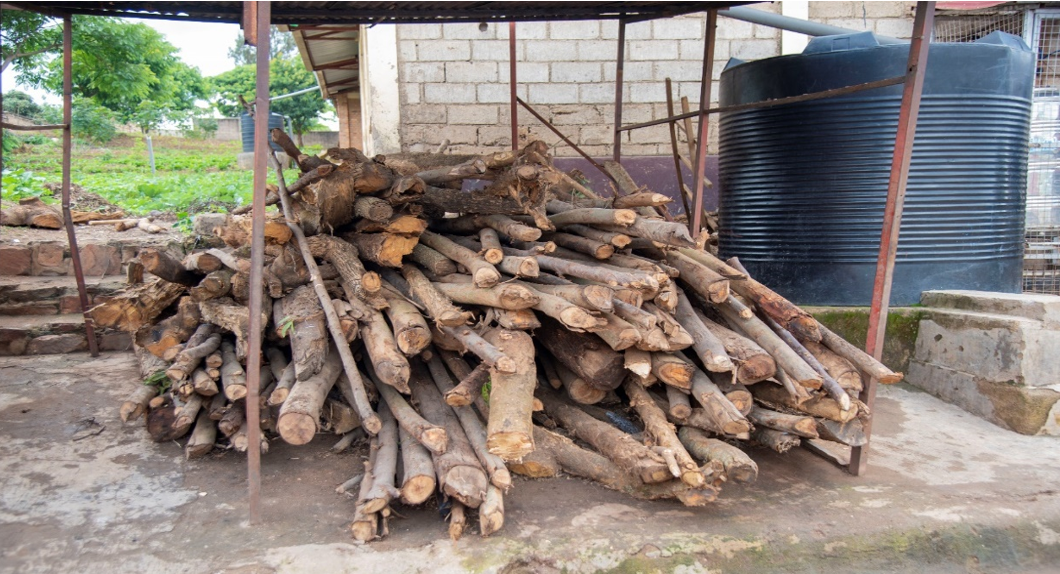
According to the Ministry of Education, Rwanda’s 5,300 schools that offer meals to students currently rely on firewood, consuming approximately 26,000 tons per month—equating to 310,000 tons annually. This places a financial strain on the government, costing an estimated 8 billion Rwandan Francs per year, along with an additional 600 million Rwandan Francs in other related expenses.
A statement from the Ministry emphasized the importance of changing how school meals are prepared, not only to cut costs but also to reduce harmful environmental impacts. The use of firewood and charcoal contributes to deforestation, soil degradation, and erosion, while also emitting harmful air pollutants that affect both the health of students and the surrounding communities.
Challenges and Call for Alternatives
School leaders have voiced growing concerns about the challenges of sourcing and affording firewood. Vuguziga Wellars, headteacher of Buruseri Primary School in Rutsiro District, highlighted the difficulty schools face in securing a steady supply of firewood. “There are seven schools in our sector, all of which rely on firewood, but the available forests are insufficient. We often have to pre-order firewood before the start of the school term,” Vuguziga explained.
Similarly, Nyirahabimana Dativa, a teacher at Groupe Scolaire Buhindure in Kigeyo Sector, noted that the heavy reliance on firewood could lead to severe deforestation in their region.
In response to these challenges, the government is implementing a phased approach to transition all schools in the feeding program to sustainable cooking methods by 2032.
A Three-Phase Plan for Cleaner Cooking
The transition to clean cooking solutions will occur in three phases. In the first phase, schools will be equipped with energy-efficient Muvelo stoves, designed to reduce firewood consumption by 25-40%. These stoves also feature smoke exhaust systems to reduce indoor air pollution. Additionally, schools are encouraged to soak beans and grains before cooking to further conserve energy.
Dr. Rose Baguma, the Education Policy Director at the Ministry of Education, assured The New Times that sourcing these energy-efficient stoves would not be an issue, as they are locally produced by Rwanda Polytechnic institutions. “These stoves are affordable, accessible, and meet the needs of schools across the country,” Dr. Baguma said.
In the second phase, 30% of schools will transition to cleaner alternatives, such as liquefied petroleum gas (LPG) or solar-powered stoves, as part of a nationwide switch to sustainable cooking methods.
The final phase will see the remaining 70% of schools adopt environmentally friendly stoves, ensuring the complete elimination of firewood and charcoal use in schools by 2032.
A Sustainable Future for Rwanda’s Schools
The government’s decision to phase out firewood and charcoal in schools reflects its broader commitment to protecting Rwanda’s environment while improving the efficiency and sustainability of its school feeding programs. In addition to reducing the environmental impact, the transition to cleaner cooking methods also presents an opportunity to generate carbon credits, further supporting the nation’s climate goals.
As Rwanda moves toward a more sustainable future, the hope is that these changes will not only reduce the strain on local forests but also create healthier learning environments for students across the country.